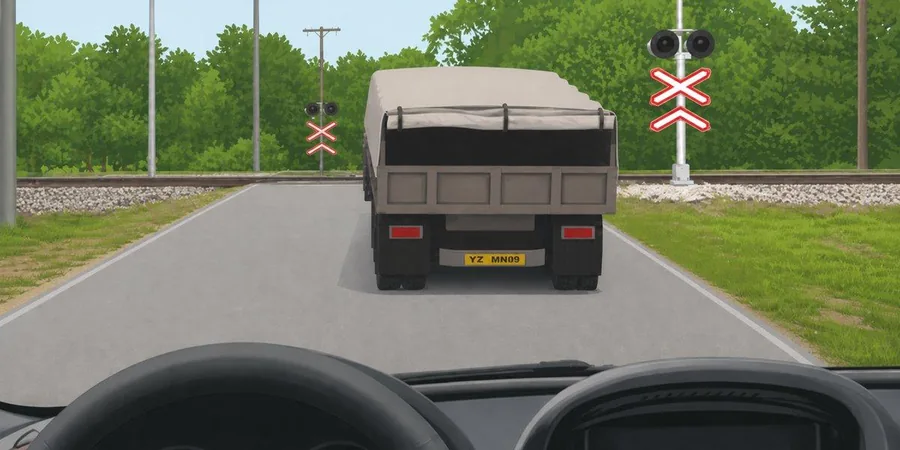
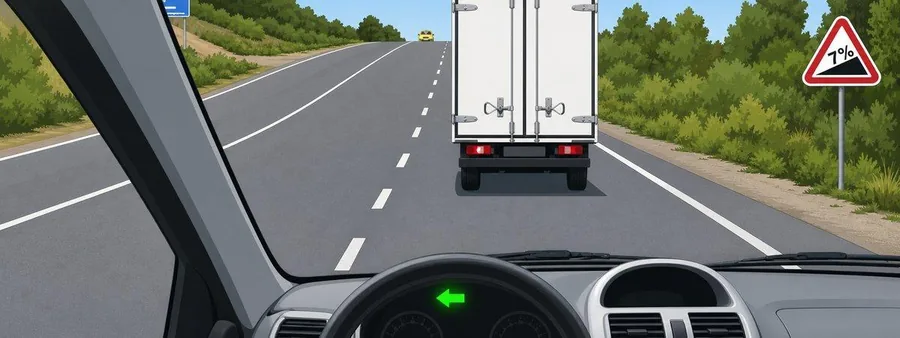
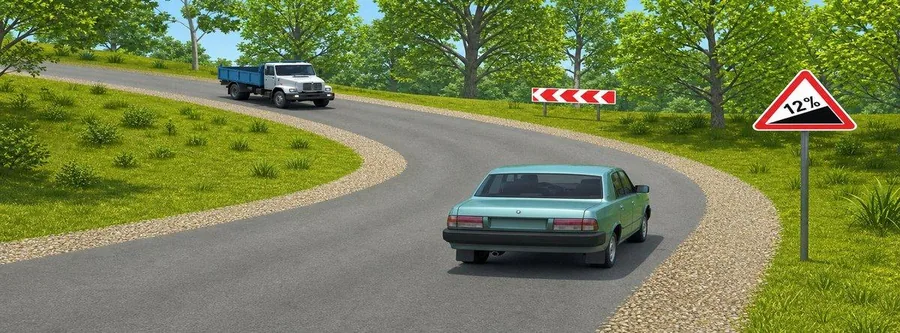
In this situation, where may passing be started?
-
At the railroad crossing.
-
After crossing the railroad crossing.
(Correct answer)
-
After proceeding 100 m beyond the railroad crossing.
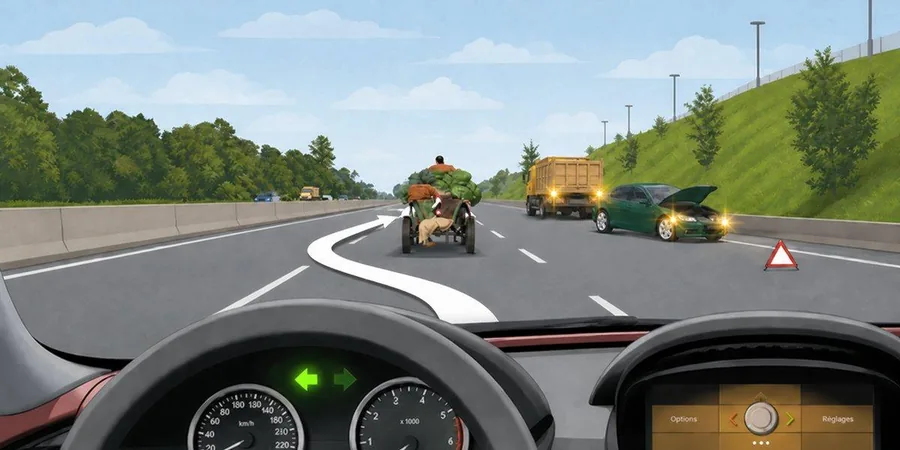
In this situation, is passing permitted?
-
Permitted because there is no oncoming vehicle.
-
Prohibited.
(Correct answer)
-
Permitted if the animal-drawn cart is moving at a speed below 30 km/h.
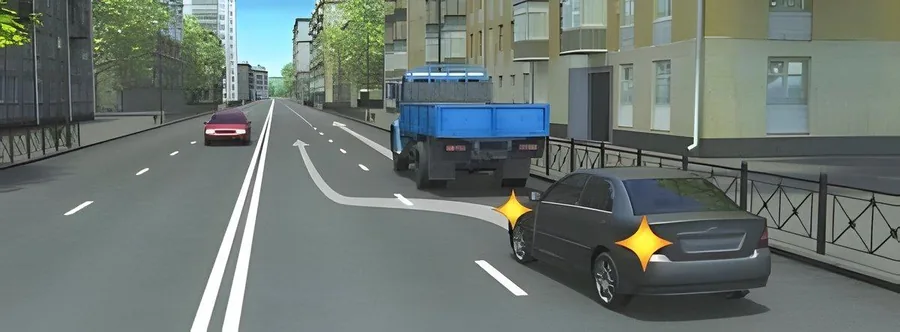
What maneuver is the passenger-car driver performing?
-
Passing without leaving the lane.
-
Passing.
(Correct answer)
-
Driving around an obstruction.
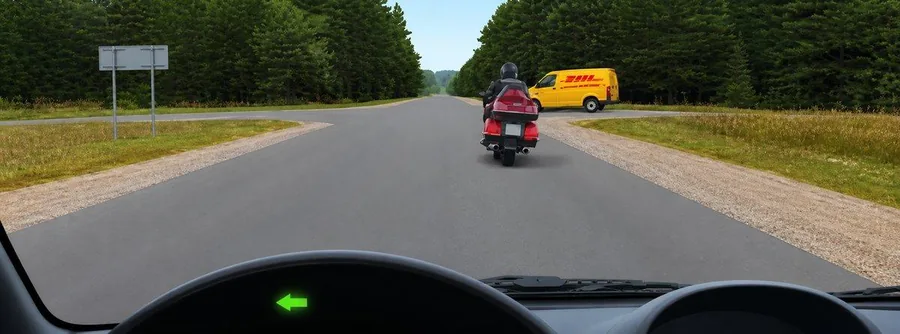
Is passing the motorcycle permitted?
-
Permitted.
-
Prohibited.
(Correct answer)
On a road with one lane in each direction, when is passing in the oncoming traffic lane permitted?
-
Only when the oncoming traffic lane is clear for a sufficient distance.
-
Only when no vehicle is passing us.
-
Both conditions must be met.
(Correct answer)
Is passing permitted in the indicated situation?
-
Prohibited.
-
Permitted if the maneuver can be completed within the visible section of the road.
-
Permitted.
(Correct answer)
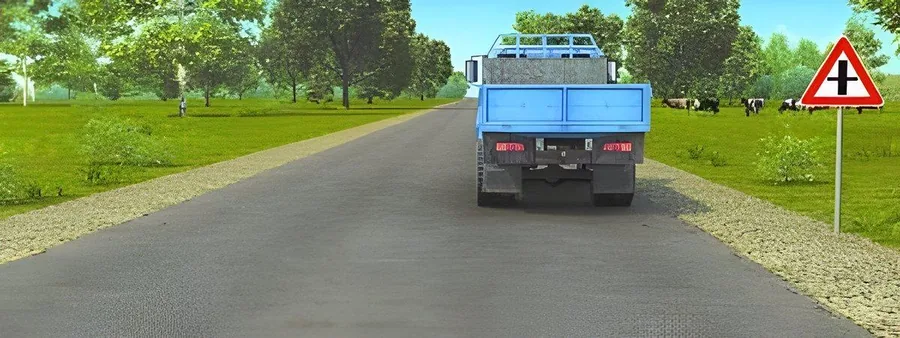
Is passing the truck permitted?
-
Yes.
-
Yes, if the passing maneuver is completed before the intersection.
(Correct answer)
-
No.
What is required of the driver of the vehicle being passed?
-
The driver must yield to the passing vehicle.
-
The driver must not interfere with the passing vehicle by increasing speed or by taking any other action.
(Correct answer)
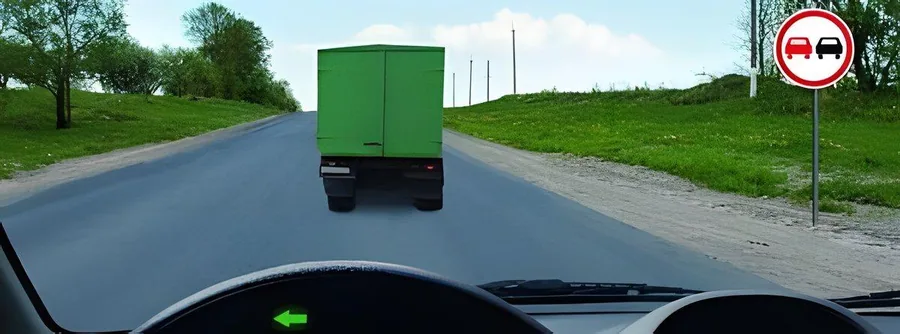
Is passing permitted in this situation?
-
Prohibited.
(Correct answer)
-
Permitted if the truck is moving at less than 30 km/h.
-
Permitted.
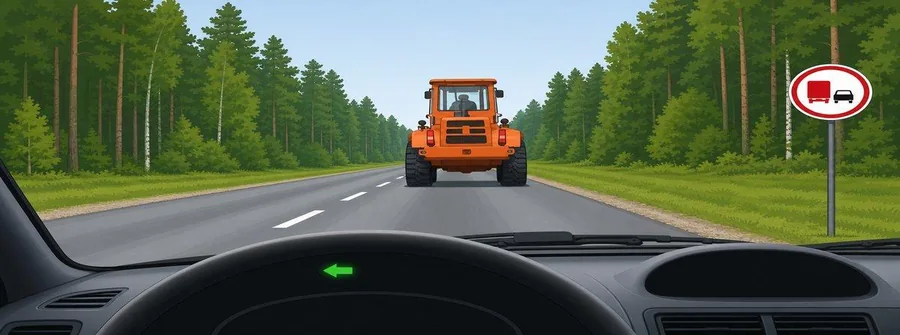
Is the driver of a truck with a maximum authorized mass of 3 metric tons permitted to pass the tractor?
-
Yes.
(Correct answer)
-
Yes, if the tractor is moving at less than 30 km/h.
-
No.
If oncoming traffic is difficult in this situation, who must yield?
-
The truck driver.
(Correct answer)
-
The passenger-car driver.
Passing at a pedestrian crossing is:
-
Prohibited only when pedestrians are present.
-
Prohibited.
(Correct answer)
-
Permitted.
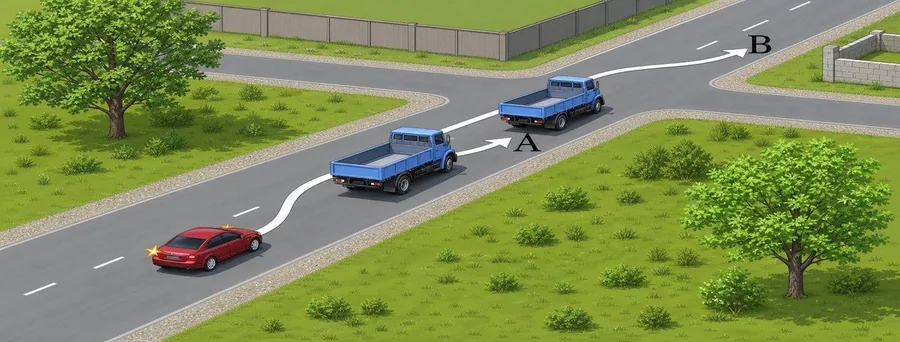
Along which path is passing permitted?
-
Either path.
-
Only A.
(Correct answer)
-
Only B.
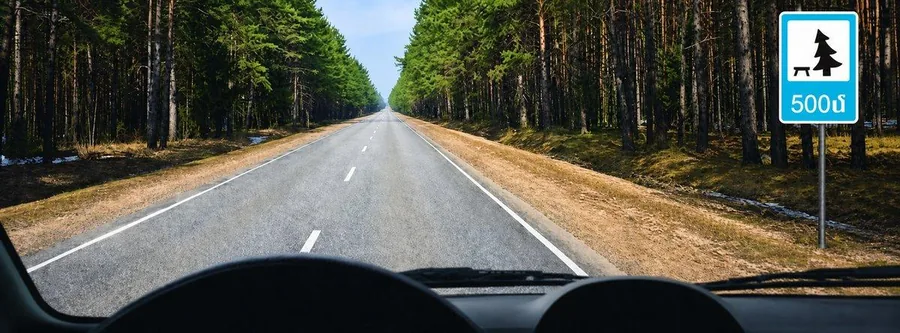
What does the traffic sign indicate?
-
There is a fallen tree 500 meters ahead.
-
There is a rest area 500 meters ahead.
(Correct answer)
-
There is a rest area along the next 500 meters.
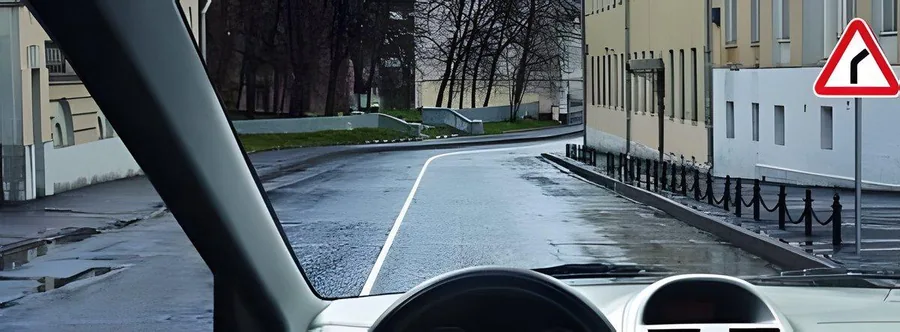
In this situation, is the driver required to activate the turn signal?
-
Yes.
-
Yes, if a vehicle is approaching from behind.
-
No.
(Correct answer)
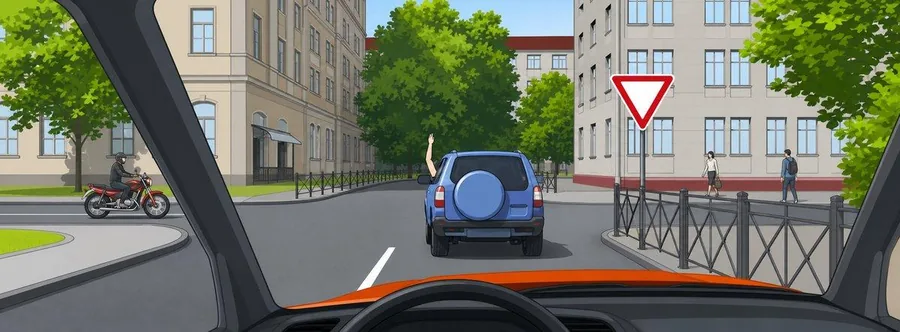
By raising an arm, the driver indicates:
-
An intention to make a left turn.
-
An intention to proceed straight ahead.
-
An intention to slow down.
(Correct answer)
Giving a signal:
-
Gives the driver the right-of-way over other road users.
-
Does not give the driver the right-of-way over other road users.
(Correct answer)
-
Gives the driver the right-of-way only when starting to move.
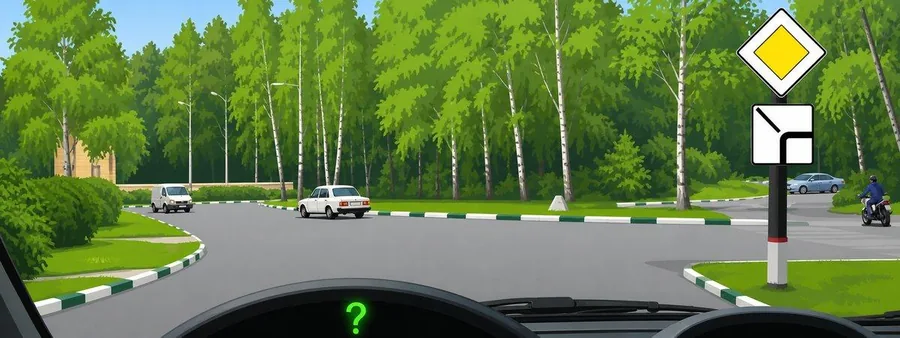
When making a right turn while following the priority road, giving a turn signal is:
-
Required.
(Correct answer)
-
Required only at night.
-
Not required.
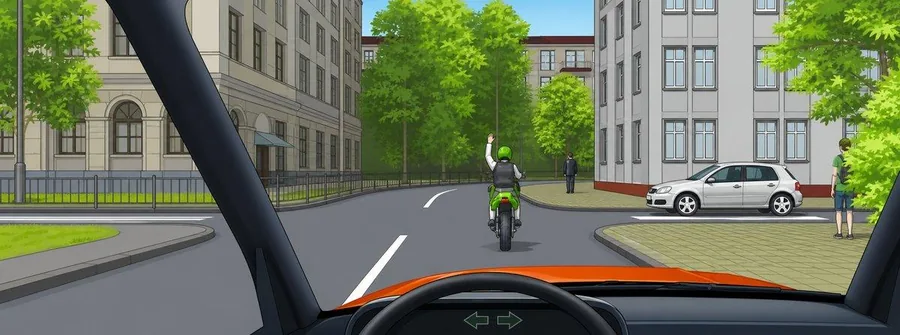
What is the driver of the motorcycle indicating?
-
An intention to continue straight ahead.
-
An intention to make a left turn.
-
An intention to slow down in order to yield to the passenger car.
(Correct answer)
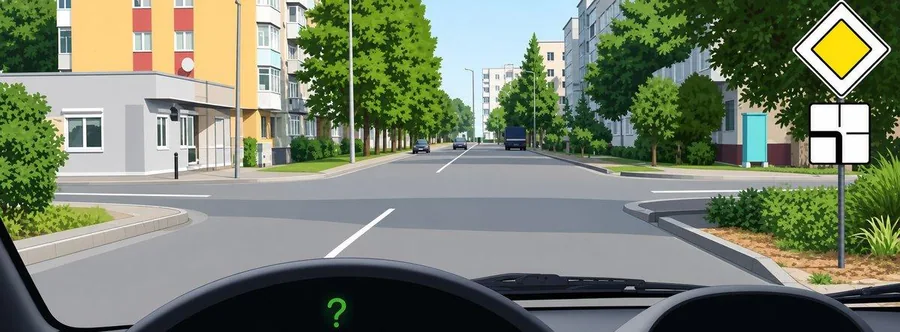
In this situation, when making a left turn, giving a turn signal is:
-
Required.
(Correct answer)
-
Not required.