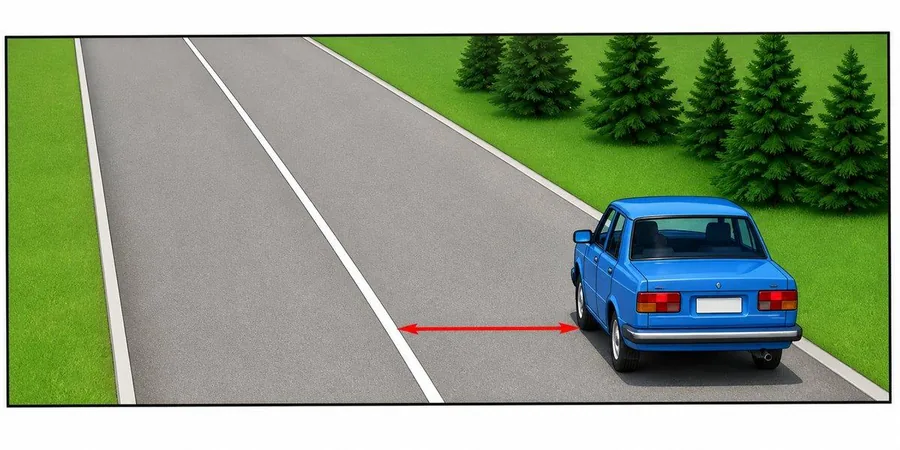
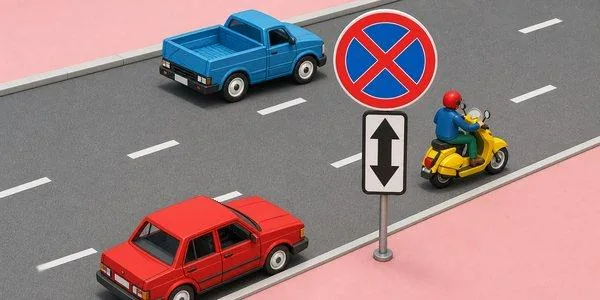
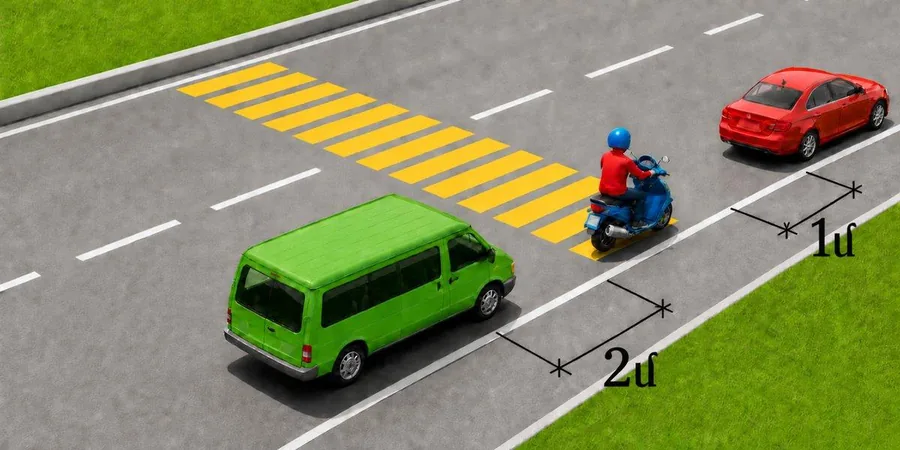
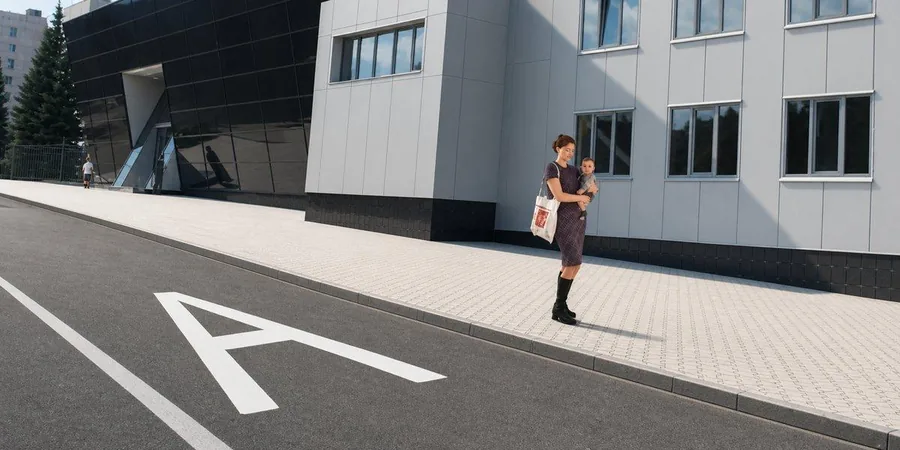
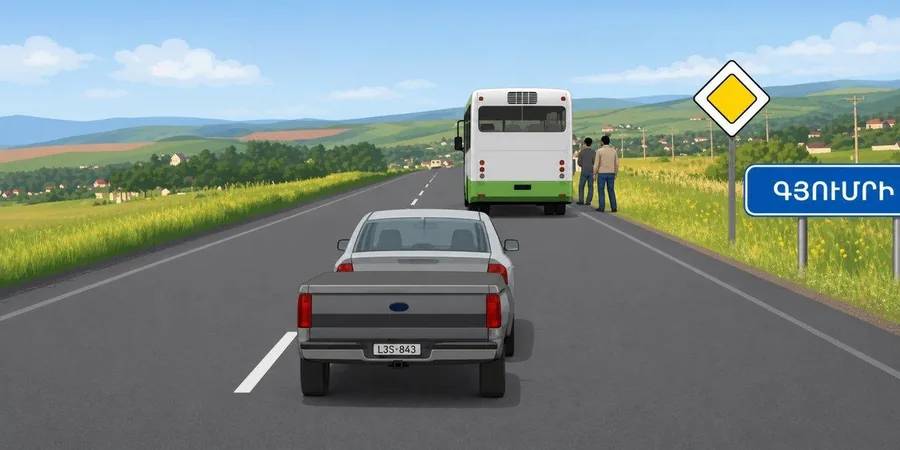
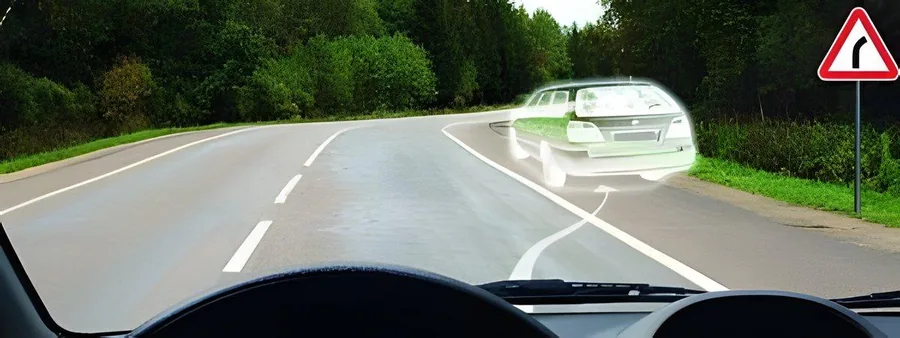
Stopping is prohibited if the distance between the solid line and the stopped vehicle is:
1
6 m.
2
5.5 m.
3
4 m.
4
3.5 m.
5
2.5 m.
(Correct answer)
42
If traffic across a railroad crossing is prohibited and there are no traffic signals, traffic signs, pavement markings, or barrier gate, the driver must stop:
1
At least 5 m from the nearest rail.
2
At least 7 m from the nearest rail.
3
At least 10 m from the nearest rail.
(Correct answer)
43
Within what distance of a railroad crossing is vehicle parking prohibited?
1
15 m.
(Correct answer)
2
50 m.
3
100 m.
4
150 m.
44
Which answer correctly identifies the drivers who have violated the stopping rules?
1
The drivers of the red automobile and the motorcycle.
2
The driver of the blue automobile.
3
The motorcycle operator.
4
The drivers of all the vehicles.
(Correct answer)
45
Which vehicle drivers have stopped incorrectly to drop off passengers?
1
The passenger-car driver.
2
The motorcycle operator.
3
The bus driver.
4
The motorcycle operator and the bus driver.
(Correct answer)
5
All drivers.
46
If traffic across a railroad crossing is prohibited and there are no traffic signals, traffic signs, or pavement markings, the driver must stop:
1
At least 5 m before the barrier gate.
(Correct answer)
2
At least 3 m before the barrier gate.
3
Immediately before the barrier gate.
47
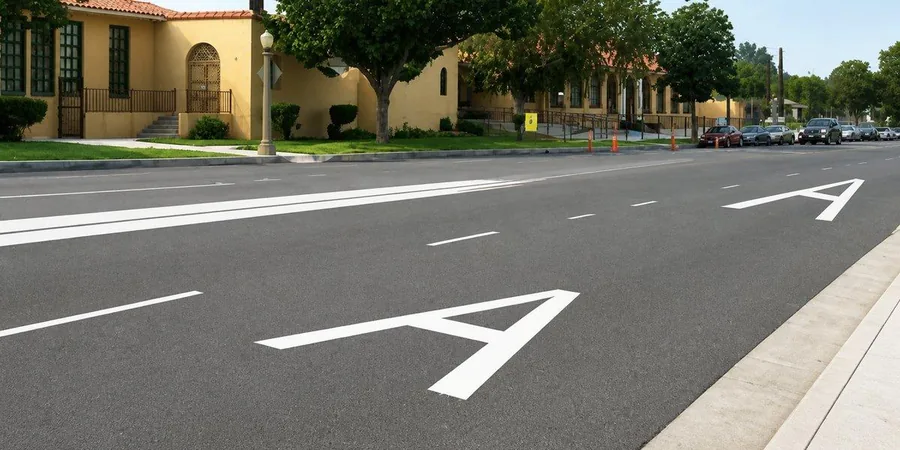
What does the letter “A” marked in a traffic lane of the roadway mean?
1
The road (route) number.
2
A special lane designated for public transit vehicles.
(Correct answer)
3
A special lane designated for category A vehicles.
48
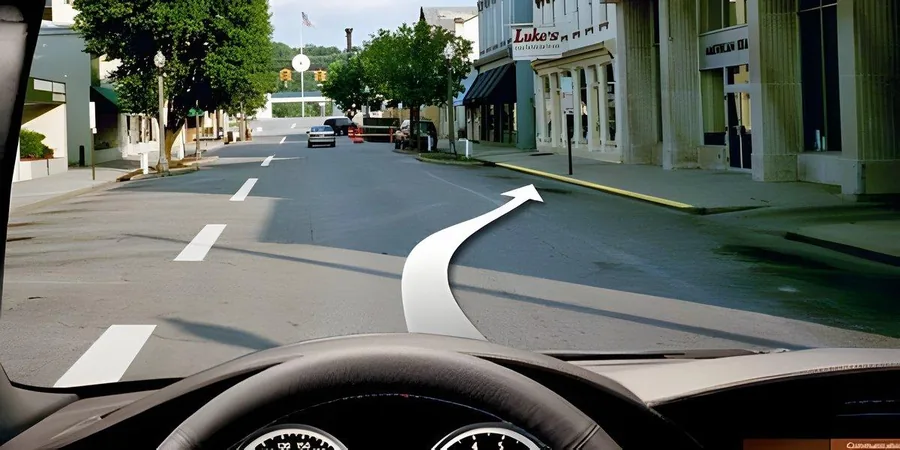
Is the vehicle permitted to stop at the indicated location to drop off passengers?
1
Permitted.
2
Prohibited.
(Correct answer)
3
Permitted, but only by driving onto the sidewalk.
49
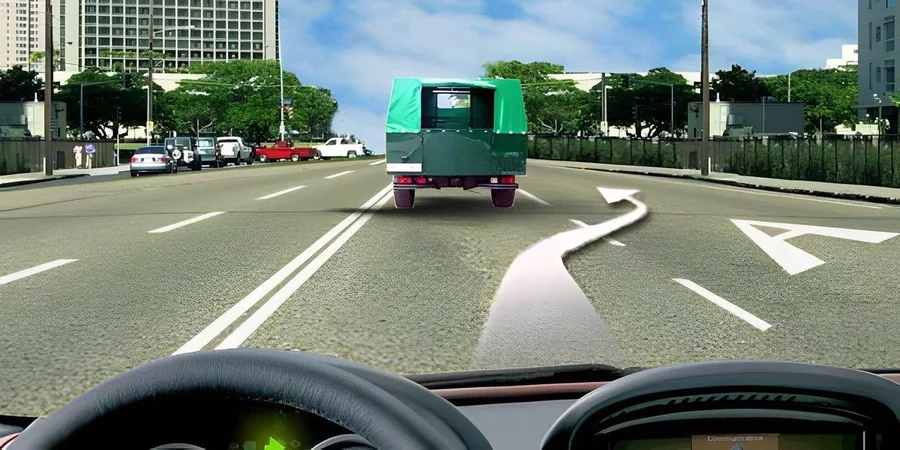
Is it permitted to continue in the direction indicated by the arrow?
1
Prohibited.
2
Permitted in all cases.
3
Permitted for the purpose of stopping to drop off passengers.
(Correct answer)
4
Permitted for the purpose of passing the truck.
50
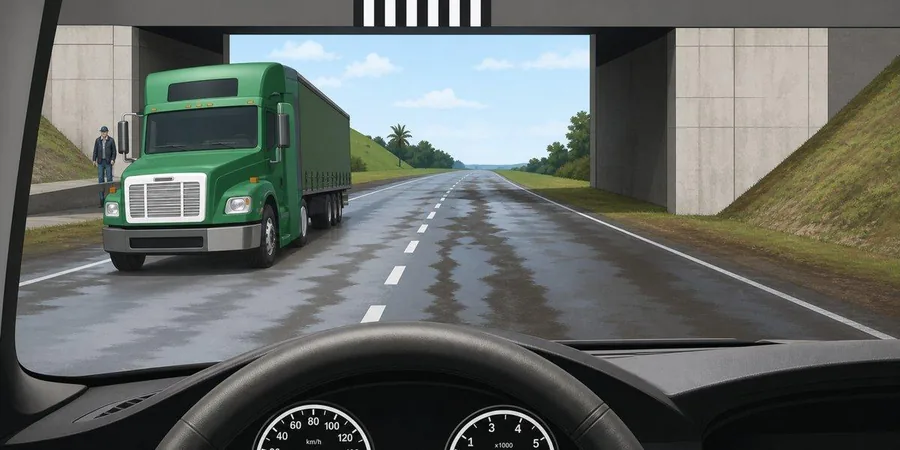
This type of vertical pavement marking indicates:
1
The lower edges of a bridge or tunnel.
(Correct answer)
2
The entrance to an unlit tunnel.
3
Any element of a road structure that creates a hazard for traffic.
51
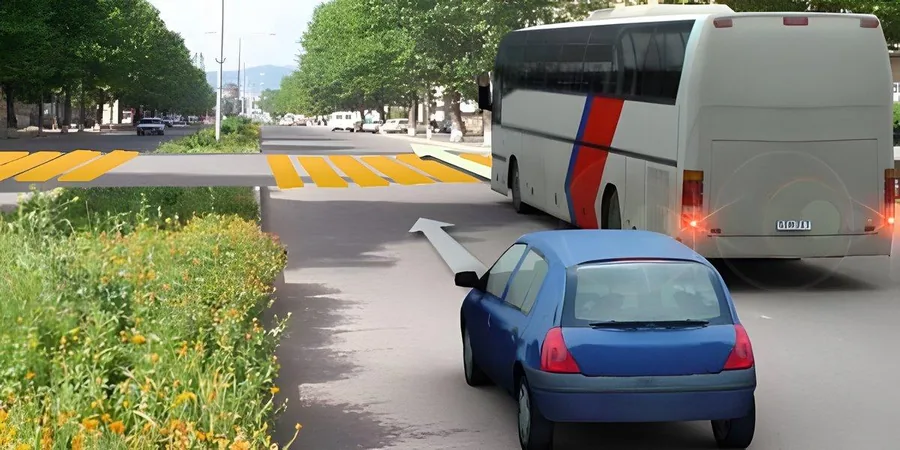
What should the passenger-car driver do if the bus driver has begun braking?
1
Continue driving.
2
Reduce speed, stop if necessary, and continue after making sure there are no pedestrians in the crossing.
(Correct answer)
3
Stop and continue only after the bus resumes driving.
52
The bus driver has stopped to pick up passengers. The passenger car is proceeding at a speed of 70 km/h. Which vehicle driver is violating the requirements of the traffic rules?
1
Neither driver.
(Correct answer)
2
The bus driver.
3
The passenger-car driver.
4
Both drivers.
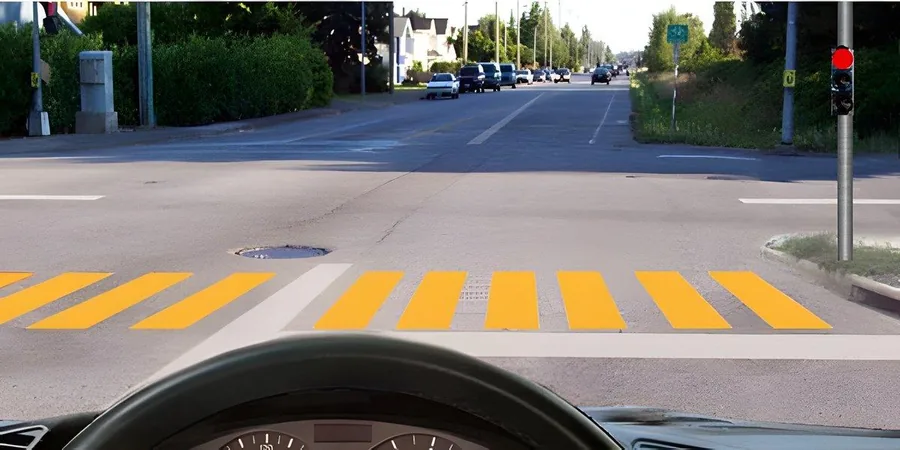
53
Where must the driver stop in this situation?
1
Stopping is not required.
2
Before the traffic signal.
3
Before the “Stop Line” pavement marking.
(Correct answer)
4
Before the intersection of the traffic lanes.
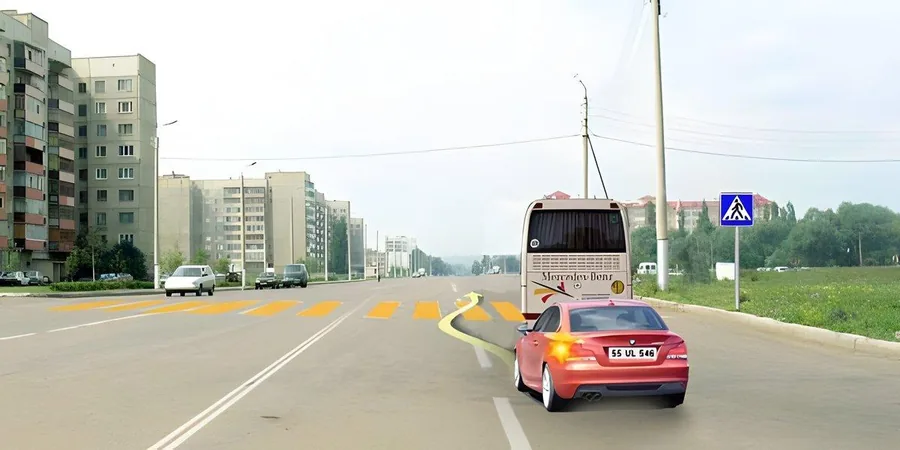
54
The bus has stopped to yield to a pedestrian. In this situation, is the passenger-car driver violating the requirements of the traffic rules?
1
Yes.
(Correct answer)
2
No.
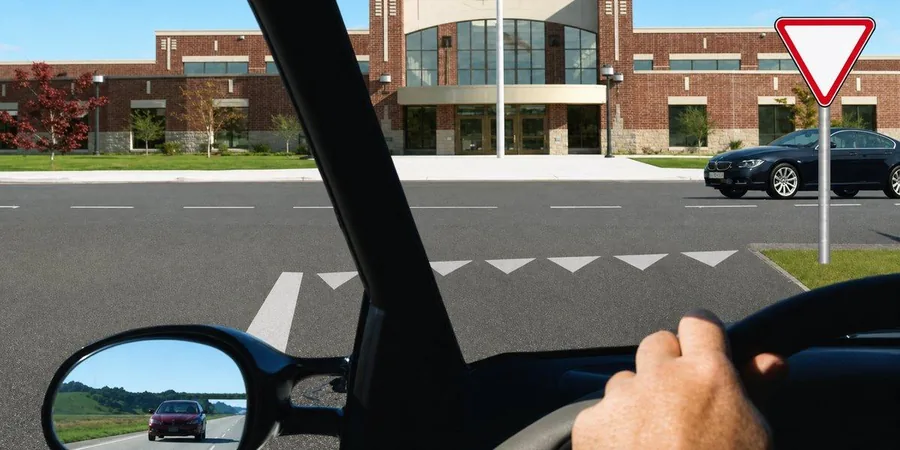
55
Where must the bus driver stop in order to yield to the passenger car before continuing to the left?
1
Before the traffic sign.
2
At the pavement marking.
(Correct answer)
3
At a safe location at the driver’s discretion.
56
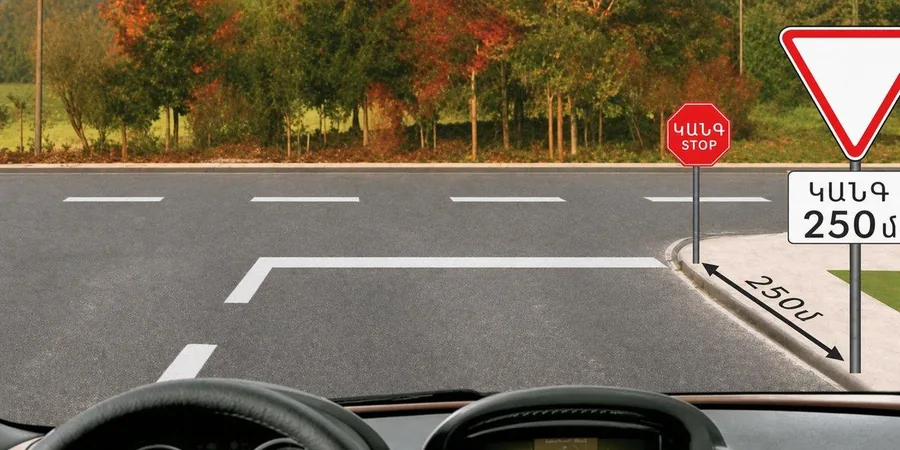
Where must the driver stop in this situation?
1
At the first traffic sign.
2
Before the “Stop Line” pavement marking.
(Correct answer)
3
At the second traffic sign.
4
Stopping is not required.
57
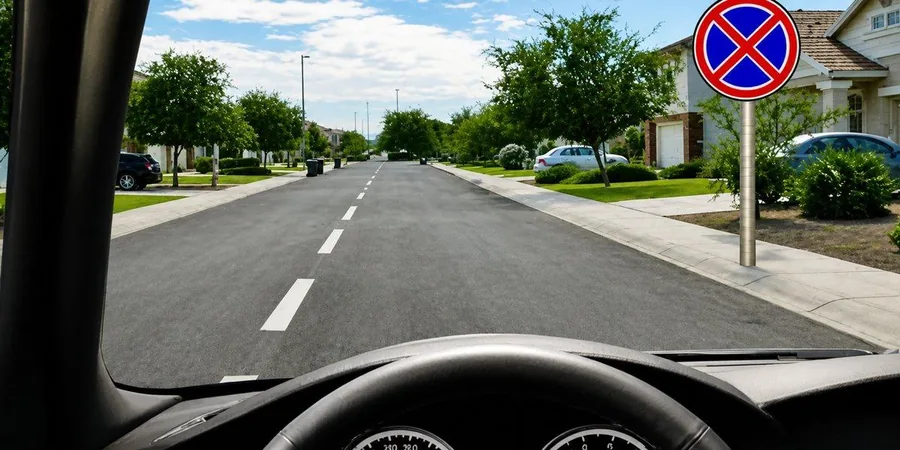
Which vehicles are permitted to stop within the area where this sign is in effect?
1
Only public transit vehicles.
2
Only vehicles driven by persons with disabilities.
3
Only taxis with the taximeter activated.
4
Stopping is prohibited for all vehicles.
(Correct answer)
58
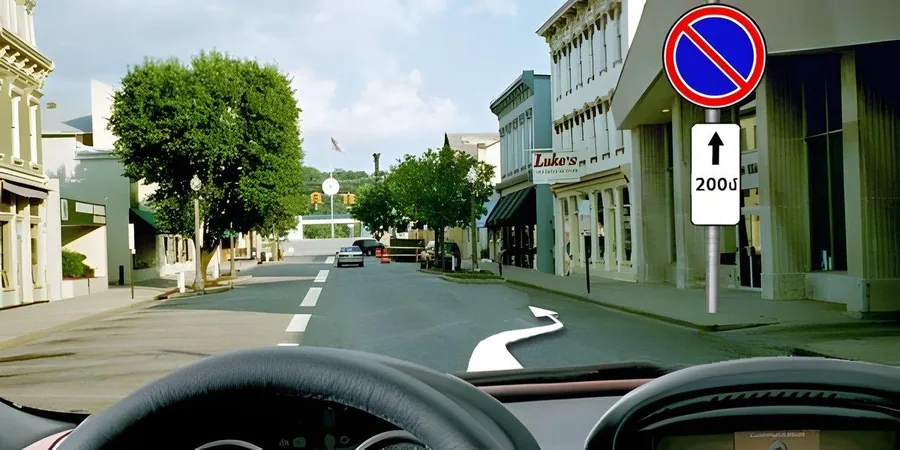
Within the area where these traffic signs are in effect, is stopping to pick up passengers permitted?
1
Permitted.
(Correct answer)
2
Prohibited.
59
For which vehicles is the lane marked with the letter “A” designated?