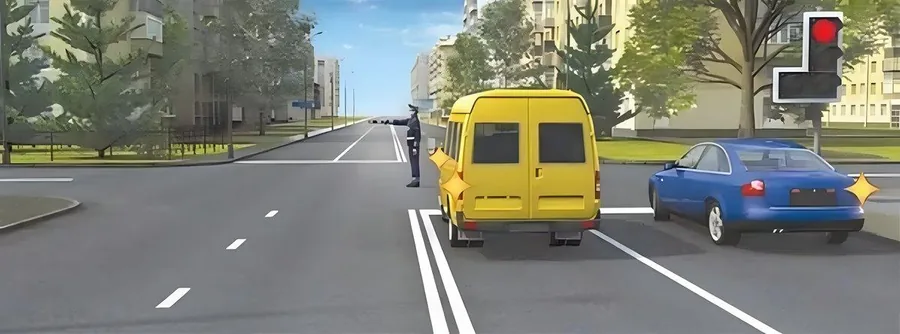
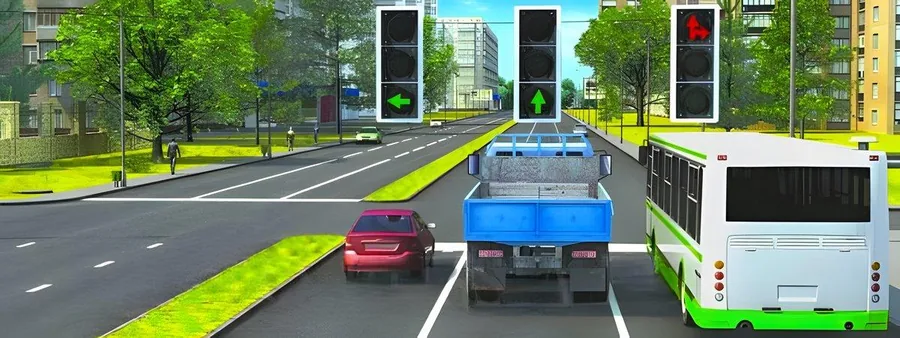
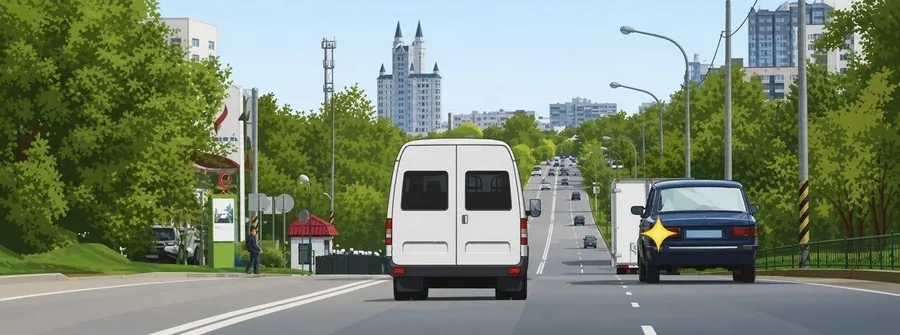
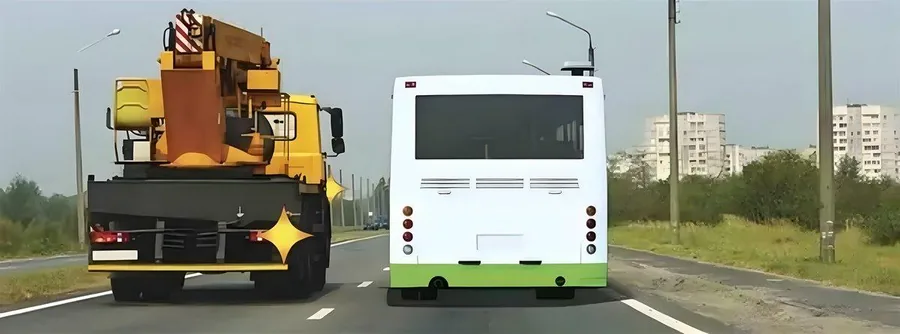
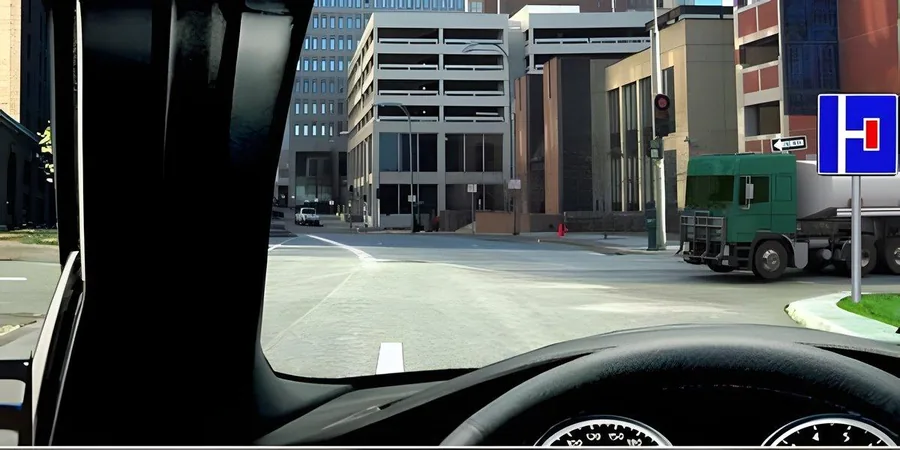
“Organized transportation of groups of children” means:
1
The organized transportation of three or more children of preschool and school age.
2
The organized transportation by a motor vehicle, excluding public transit vehicles, of two or more children of preschool and school age.
(Correct answer)
82
What is called a “change of direction of travel”?
1
A maneuver performed for the purpose of entering another road.
2
A maneuver performed for the purpose of entering another road or an adjacent area.
3
A change from the previously selected direction of travel, excluding reversing, performed by making a turn or U-turn.
(Correct answer)
4
A change from the previously selected direction of travel, including reversing, performed by making a turn or U-turn.
83
An “organized convoy” is:
1
A group of at least three motor vehicles proceeding one after another in the same traffic lane with their headlights continuously activated, escorted at the front by a vehicle with flashing blue and red beacons activated.
(Correct answer)
2
A group of at least two motor vehicles proceeding one after another in the same traffic lane with their headlights continuously activated, escorted at the front and rear by vehicles with flashing blue and red beacons activated.
84
If the roadway is divided into lanes by pavement markings, a bus driver is permitted to cross broken lines:
1
During heavy traffic when all lanes are occupied.
2
Only when changing lanes.
(Correct answer)
3
In any case.
85
A bus driver is prohibited from crossing a railroad crossing if the crossing attendant:
1
Is facing or has their back to the driver.
2
Gives a signal with a baton, red lantern, or a flag raised above the head.
3
Has extended the arms to the sides.
4
In all of the listed cases.
(Correct answer)
86
When approaching a railroad crossing, a bus driver must be guided by:
1
The instructions of the railroad-crossing attendant.
2
The requirements of traffic signals, signs, and pavement markings used to regulate traffic at railroad crossings, and by the position of the barrier.
3
All of the listed requirements.
(Correct answer)
87
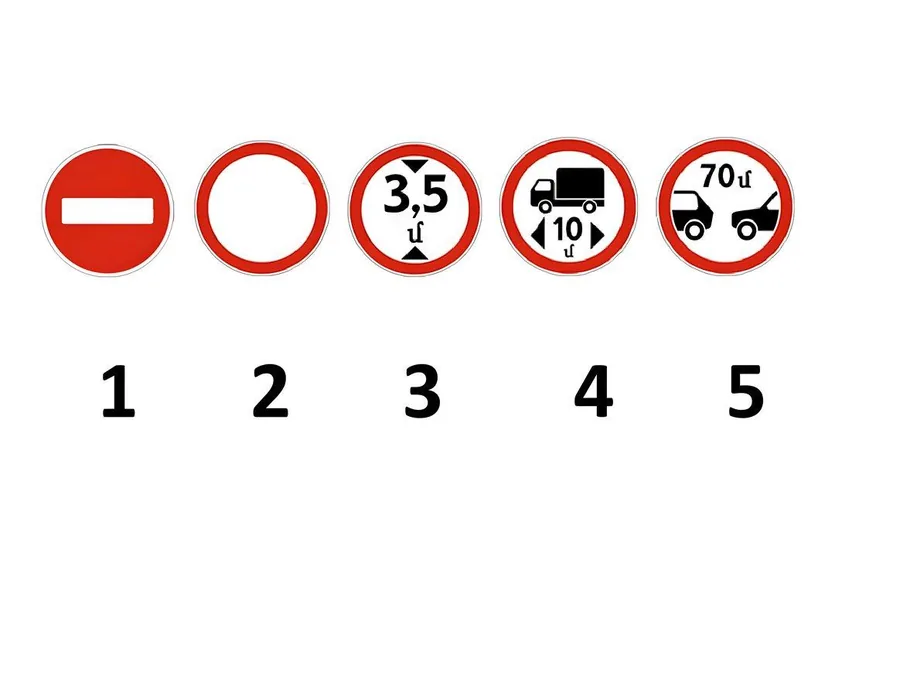
Which of these signs does not apply to public transit buses?
1
1 and 4.
2
2 and 4.
3
3 and 5.
4
1 and 2.
(Correct answer)
5
Only 2.
88
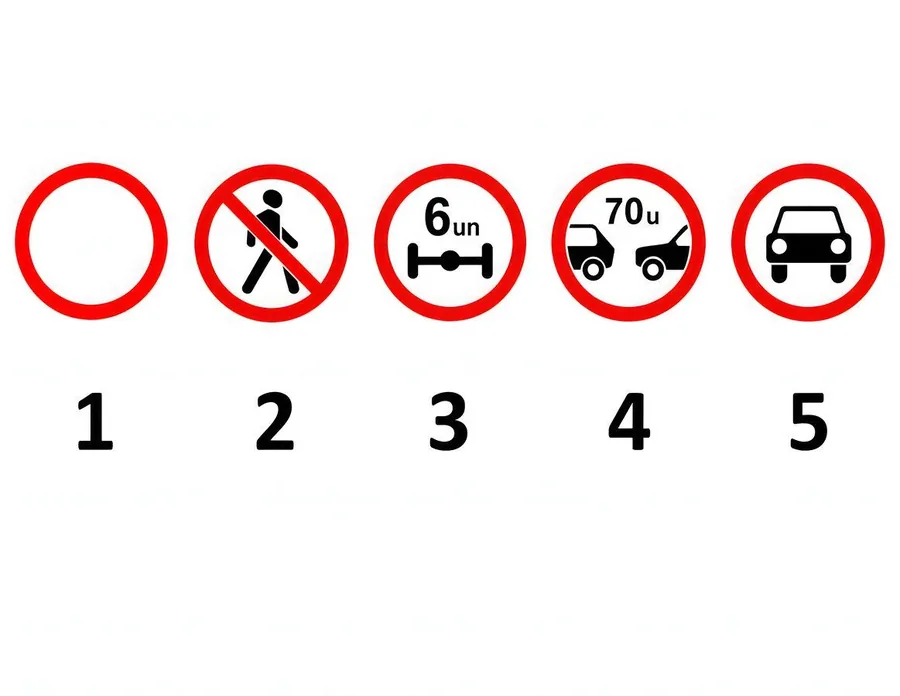
Which of these signs does not apply to vehicles driven by persons with Group I or II disabilities, or persons with profound or severe functional limitations, or vehicles transporting such a person or a child with disability status?
1
2 and 3.
2
4 and 1.
3
1 and 5.
(Correct answer)
4
5 and 2.
89
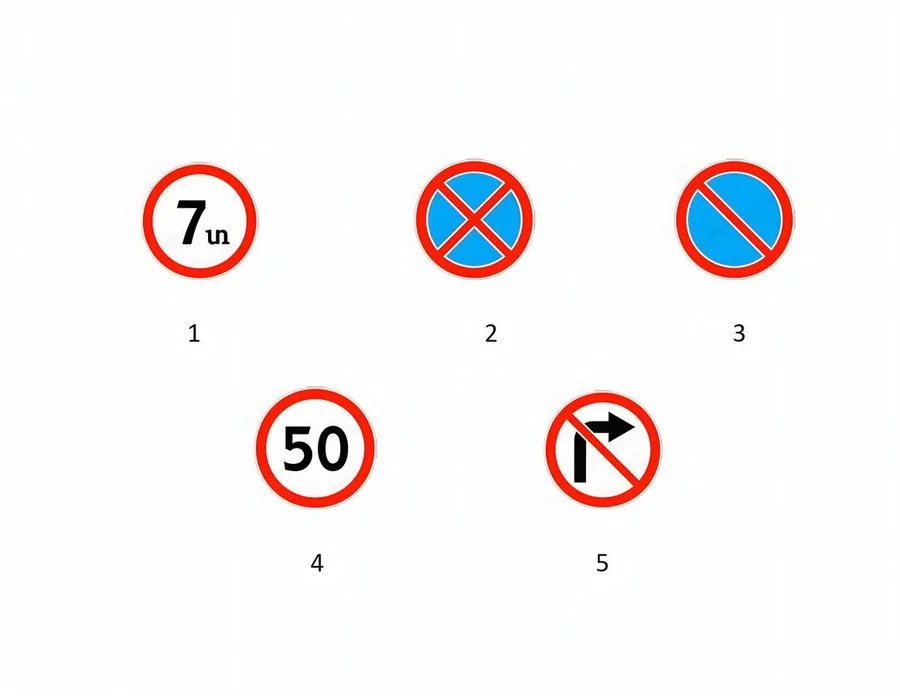
Which sign does not apply to public transit vehicles?
1
1.
2
2.
3
3.
4
4.
5
5.
(Correct answer)
90
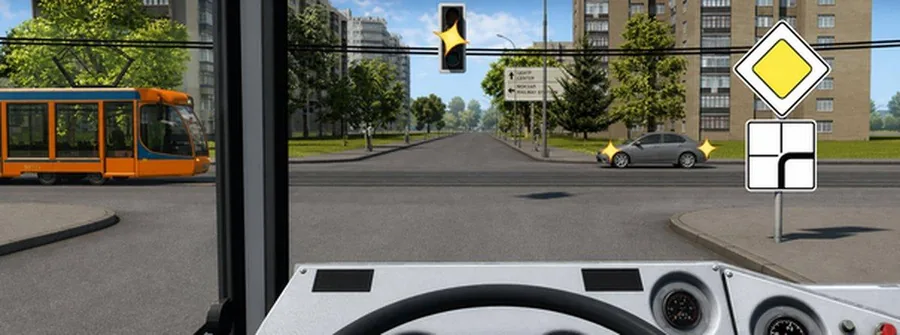
A bus driver intends to proceed straight ahead. With the traffic signal flashing yellow, the driver:
1
Must yield to vehicles approaching from the right and left.
2
Must yield only to the tram.
3
Must yield only to the passenger car.
(Correct answer)
4
Will proceed first.
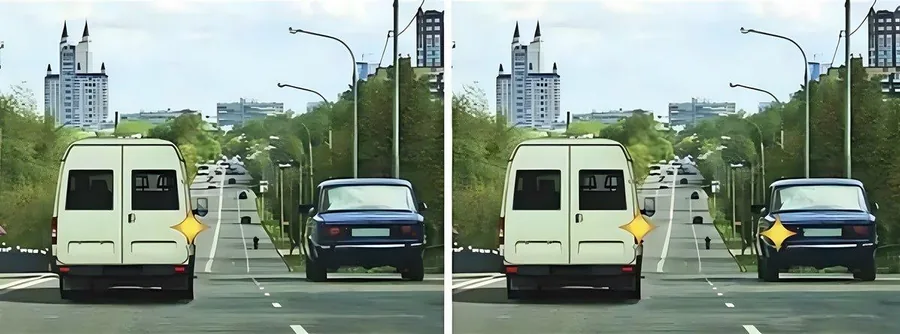
91
While proceeding in the leftmost lane, a bus driver intends to change to the right lane. In which illustration is the driver required to yield to the passenger car?
1
In the left illustration.
2
In the right illustration.
3
In both illustrations.
(Correct answer)
92
Is towing with a bus permitted in fog?
1
Not permitted.
2
Permitted at a speed not exceeding 50 km/h.
(Correct answer)
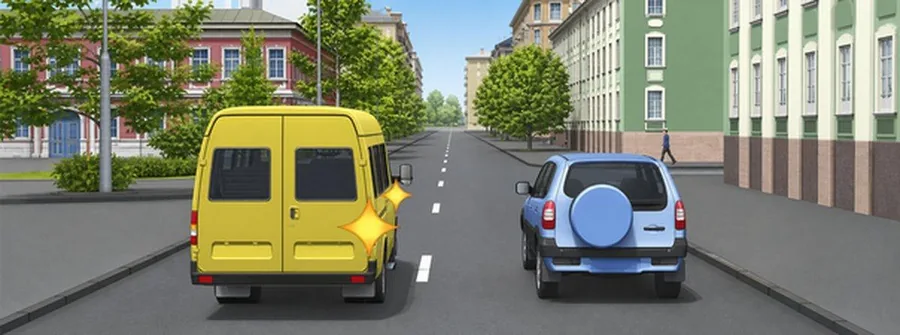
93
In this situation, the driver of the bus changing into the right lane:
1
Must not interfere with the passenger car.
(Correct answer)
2
Has the right-of-way because the driver is completing a passing maneuver.
3
Has the right-of-way because the bus’s right turn signal is activated.
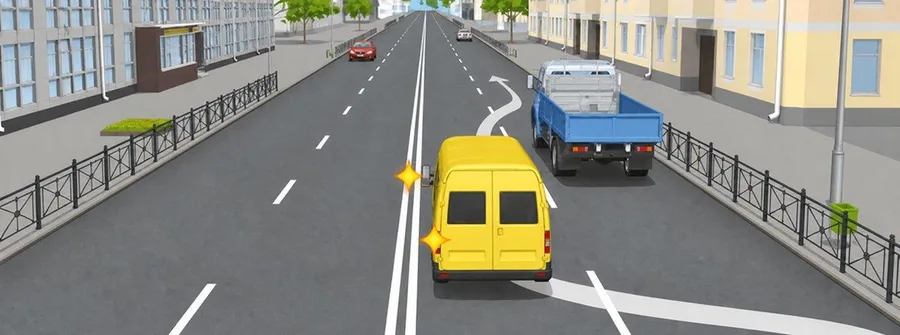
94
A bus driver must cancel the left turn signal:
1
After changing into the left lane.
(Correct answer)
2
After passing the truck.
3
After returning to the right lane.
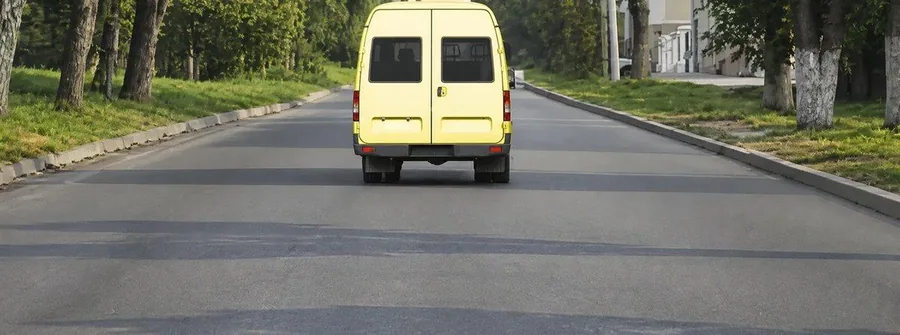
95
Do the actions of the bus driver proceeding along the center of the road comply with the traffic rules?
1
They comply.
2
They comply if there are no oncoming vehicles.
3
They do not comply.
(Correct answer)
96
Which vehicles are permitted to proceed?
1
The bus and the passenger car.
(Correct answer)
2
Only the bus.
3
Only the passenger car.
4
No vehicles.
97
Which vehicles are permitted to proceed straight ahead?
1
Only the truck.
(Correct answer)
2
The passenger car and the truck.
3
The truck and the bus.
4
All vehicles.
98
Must the bus driver yield to the passenger car?
1
Must yield.
2
Not required.
(Correct answer)
99
Must the bus driver yield to the truck?
1
Must yield.
2
Must yield if the truck has begun changing to the right lane.
3
Not required.
(Correct answer)
100
Is a bus driver permitted to make a right turn in this situation?
1
Permitted only for the driver of a fixed-route bus.
2
Permitted for the driver of any bus.
(Correct answer)