Trucks carrying people in an equipped cargo bed are permitted to proceed at a speed not exceeding:
-
60 km/h.
(Correct answer)
-
70 km/h.
-
80 km/h.
Outside populated areas, at what distance before the beginning of a hazardous section is this warning sign installed?
-
50–100 m.
-
150–300 m.
(Correct answer)
-
300–500 m.
Vehicles transporting organized groups of children are permitted to proceed at a speed not exceeding:
-
60 km/h.
(Correct answer)
-
70 km/h.
-
80 km/h.
In populated areas, vehicles are permitted to proceed at a speed not exceeding:
-
60 km/h.
(Correct answer)
-
80 km/h.
-
90 km/h.
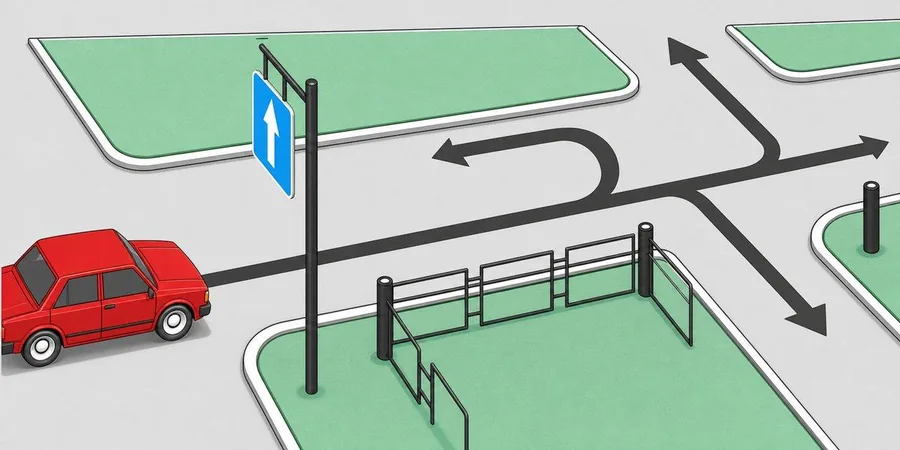
In which direction is traffic permitted?
-
Straight ahead only.
-
Straight ahead and to the right.
-
Straight ahead, to the right, and to the left.
(Correct answer)
-
In all directions.
Outside populated areas, intercity buses are permitted to proceed at a speed not exceeding:
-
70 km/h.
-
90 km/h.
(Correct answer)
-
110 km/h.
Are drivers of suburban, interregional, and intercity buses permitted to exceed 60 km/h in populated areas?
-
Permitted only on roads with two or more lanes for traffic in the same direction.
-
Permitted.
-
Prohibited.
(Correct answer)
Is the driver of an intercity bus permitted to exceed 70 km/h outside populated areas?
-
Permitted only when proceeding on roads with two or more lanes for traffic in the same direction.
-
Permitted, provided the speed does not exceed 90 km/h.
(Correct answer)
-
Prohibited.
During towing, if the hazard warning lights are absent or malfunctioning, the emergency warning triangle must be placed:
-
At the rear of the towed vehicle.
(Correct answer)
-
At the front of the towing vehicle.
-
On either vehicle, in a visible location, at the driver’s discretion.
When towing with a rigid coupling, the distance between the vehicles must not exceed:
-
2 m.
-
3 m.
-
4 m.
(Correct answer)
-
5 m.
-
6 m.
When towing with a rigid or flexible coupling, in which of the following cases is carrying people in the towed vehicle permitted?
-
In a bus.
-
In a passenger car.
(Correct answer)
-
In the cargo bed of a truck when towing with a rigid coupling.
What is the maximum permitted speed when towing with a motor vehicle?
-
30 km/h.
-
40 km/h.
-
50 km/h.
(Correct answer)
-
60 km/h.
-
70 km/h.
Under icy road conditions, towing is prohibited:
-
With a flexible coupling.
(Correct answer)
-
With a rigid coupling.
-
By the partial-loading method.
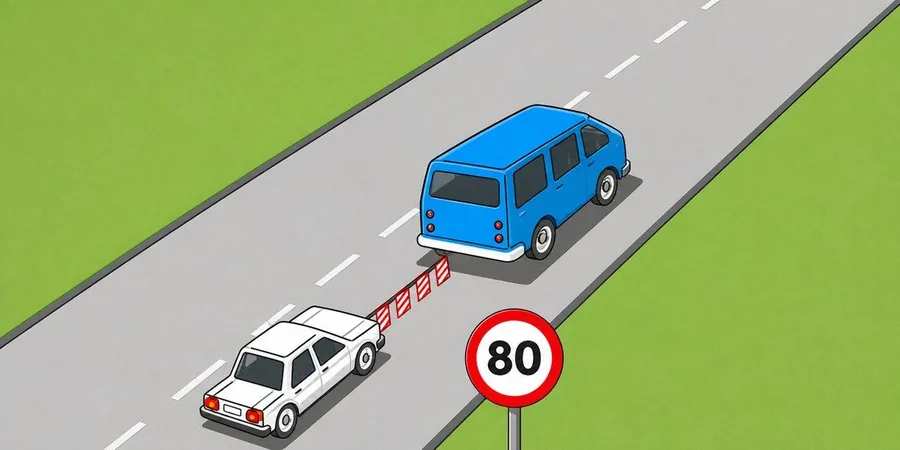
What is the maximum speed at which towing may be performed under the indicated conditions?
-
30 km/h.
-
50 km/h.
(Correct answer)
-
70 km/h.
-
80 km/h.
When towing with a flexible or rigid coupling, is carrying people in the towed motor vehicle permitted?
-
Permitted in a bus and trolleybus.
-
Permitted only in a passenger car.
-
Permitted in the cargo bed of a truck and in a passenger car.
-
Permitted in the cab of a truck and in a passenger car.
(Correct answer)
-
Prohibited.
Under icy road conditions, towing:
-
Is prohibited.
-
Is permitted.
-
Is permitted when towing with a rigid coupling or by the partial-loading method.
(Correct answer)
What is the maximum permitted speed when towing a vehicle with a flexible coupling?
-
70 km/h.
-
60 km/h.
-
50 km/h.
(Correct answer)
-
40 km/h.
-
30 km/h.
In which case is towing prohibited?
-
Under icy road conditions with a rigid coupling.
-
Under icy road conditions with a flexible coupling.
(Correct answer)
-
By motorcycles with sidecars.
When towing motor vehicles outside populated areas, the speed must not exceed:
-
30 km/h.
-
40 km/h.
-
50 km/h.
(Correct answer)
-
60 km/h.
-
70 km/h.
When towing, what distance between the vehicles must be maintained by a flexible coupling?
-
1–3 m.
-
2–4 m.
-
3–6 m.
-
4–6 m.
(Correct answer)
-
4–8 m.