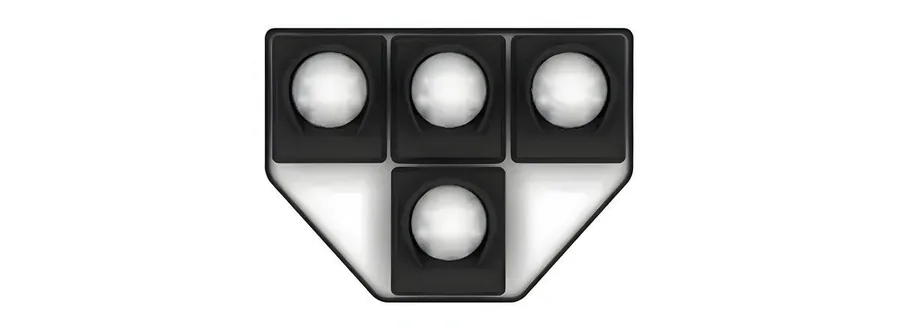
For what purpose does a traffic controller use a baton, including one with a red signal or a retroreflective disk?
-
To make the signals more visible.
(Correct answer)
-
To indicate the exact stopping location for vehicles.
Under conditions of insufficient visibility, is it permitted to proceed with only the fog lights activated?
-
Yes, if they are factory-installed.
-
Yes.
-
No, the low-beam or high-beam headlights must also be activated.
(Correct answer)
At the scene of a road traffic crash, the driver of a fixed-route bus must:
-
Only activate the hazard warning lights.
-
Only place the “Emergency Stop” sign.
-
Perform both of the above actions.
(Correct answer)
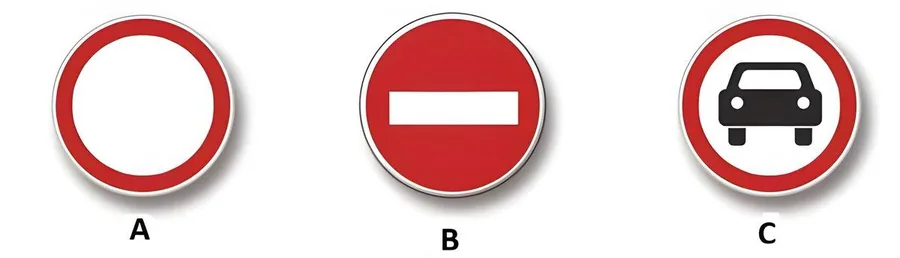
Which sign does not apply to public transit vehicles?
-
Only A.
-
Only B.
-
Only C.
-
All of them.
(Correct answer)
When a vehicle with a flashing blue beacon and a special audible signal activated approaches, drivers of public transit vehicles must:
-
Continue proceeding because they are operating on a fixed route.
-
Stop and continue only after receiving permission.
-
Yield to ensure the unobstructed passage of that vehicle.
(Correct answer)
When approaching a stationary vehicle with a flashing red beacon activated, drivers of public transit vehicles proceeding in that direction must:
-
Yield to ensure the unobstructed passage of that vehicle.
-
Stop and continue only after receiving permission.
(Correct answer)
-
Continue proceeding because they are operating on a fixed route.
At night, on illuminated road sections, a bus proceeding along a fixed route must have activated:
-
Low-beam headlights only.
(Correct answer)
-
High-beam headlights only.
-
High-beam or low-beam headlights.
Within populated areas, drivers of public transit vehicles may use the audible warning signal:
-
To obtain right-of-way over other road users.
-
When necessary to prevent a road traffic crash.
(Correct answer)
-
To warn other drivers of the intention to pass.
-
In all cases.
During daylight hours, when proceeding in an organized convoy, which lights must be activated to identify the bus?
-
High-beam headlights only.
-
Low-beam headlights only.
(Correct answer)
-
Marker lights.
To warn of passing, may a bus driver use a light signal instead of, or together with, an audible signal?
-
May not.
-
May.
(Correct answer)
A bus’s hazard warning lights must be activated:
-
To obtain right-of-way over other vehicles.
-
On the towing bus during towing.
-
When it is necessary to warn other road users of danger.
(Correct answer)
-
In all of the above cases.
When approaching a stationary vehicle with flashing blue or flashing blue and red beacons activated, a bus driver must:
-
Stop and continue only after receiving permission.
-
Reduce speed so as to be able to stop if necessary.
(Correct answer)
When approaching a stationary vehicle with a flashing red beacon activated, a bus driver proceeding in that direction must:
-
Stop and continue only after receiving permission.
(Correct answer)
-
Continue without stopping.
A bus driver must not interfere with blind pedestrians crossing the roadway:
-
Outside pedestrian crossings.
-
At pedestrian crossings.
-
In all of the listed cases.
(Correct answer)
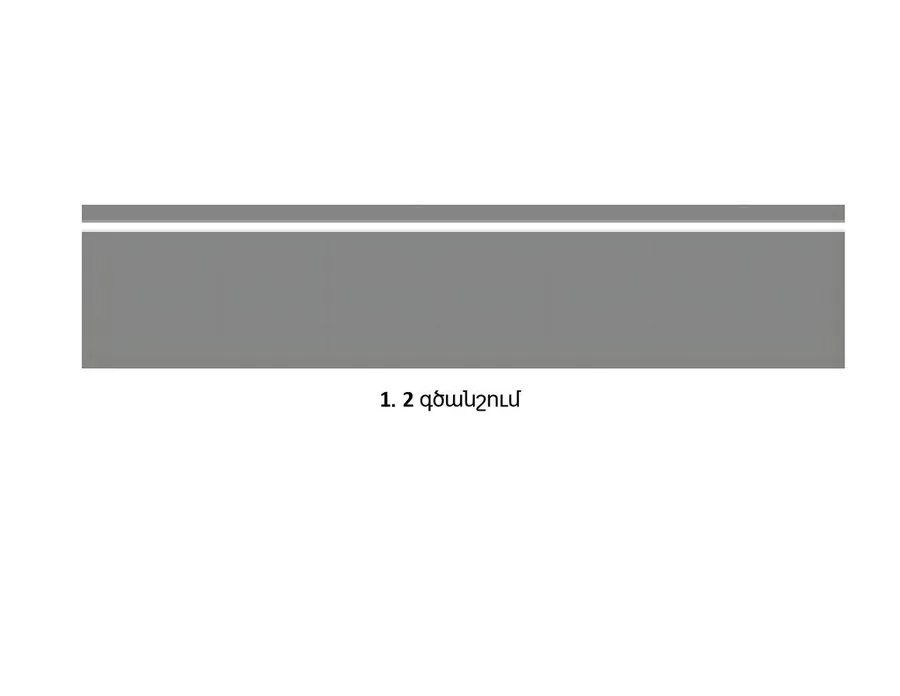
What does this pavement marking indicate?
-
The boundary between lanes of traffic moving in opposite directions.
-
The edge between the roadway and the median.
(Correct answer)
During daylight hours, public transit vehicles proceeding against the main traffic flow in a specially designated lane must have activated:
-
High-beam headlights.
-
Low-beam headlights.
(Correct answer)
-
Marker lights.
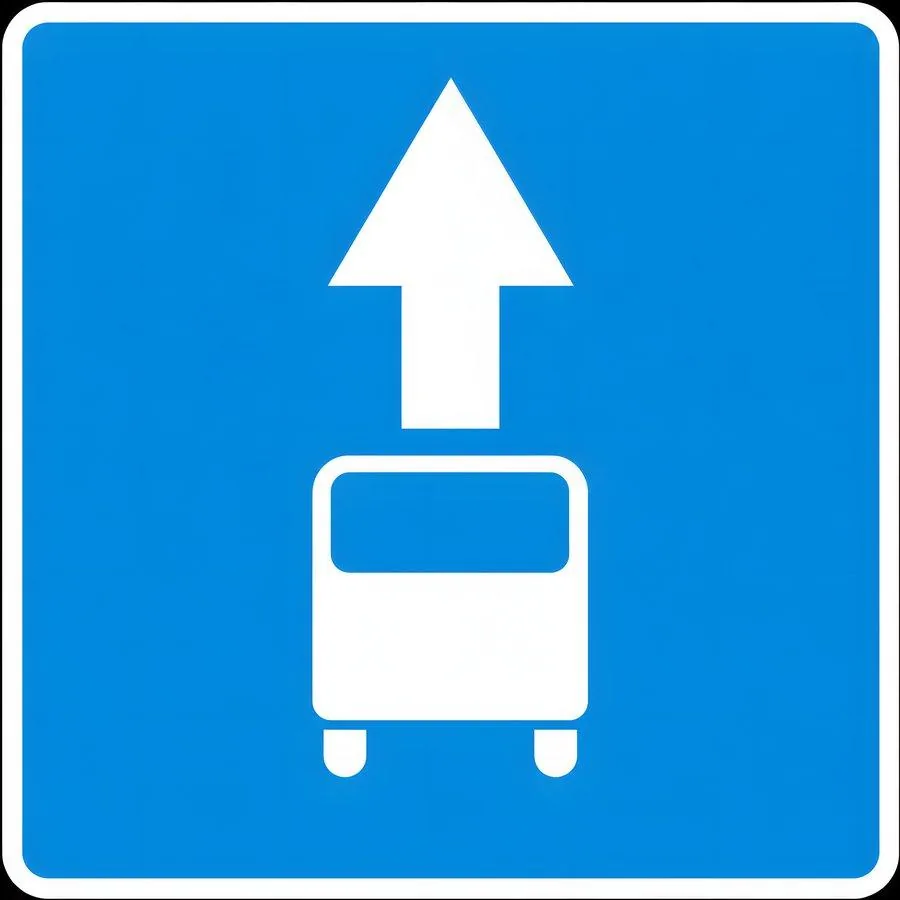
When this sign is present, public transit vehicles must have the following activated during daylight hours:
-
High-beam or low-beam headlights.
-
Low-beam headlights.
-
Marker lights and fog lights.
-
Hazard warning lights.
-
None of the above.
(Correct answer)
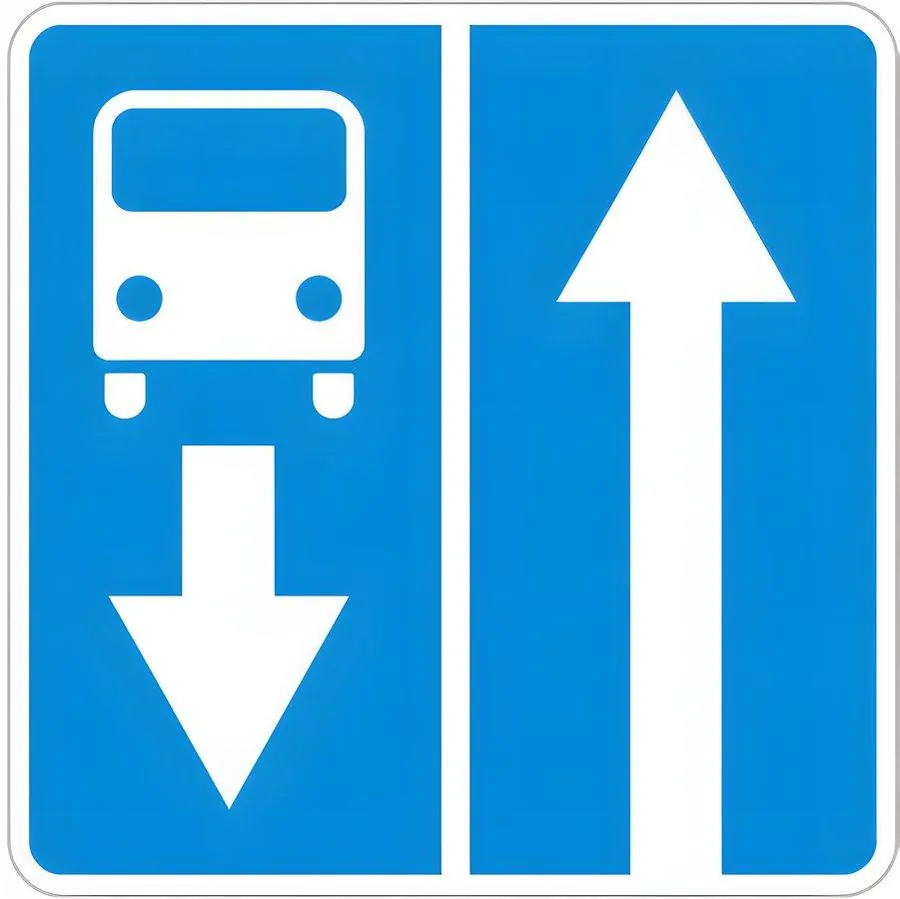
When this sign is present, drivers of public transit vehicles must activate the following during daylight hours:
-
High-beam or low-beam headlights.
-
Low-beam headlights.
(Correct answer)
-
Marker lights.
-
Hazard warning lights.
-
All of the listed lighting devices.
A bus’s high-beam headlights must be switched to low beam:
-
Whenever necessary to avoid dazzling drivers of oncoming vehicles.
-
Whenever necessary to avoid dazzling drivers of vehicles proceeding in the same direction.
-
At a distance of not less than 150 meters from oncoming vehicles.
-
In all of the listed cases.
(Correct answer)
The signals of this traffic signal apply to:
-
Trams only.
-
Trams, as well as other public transit vehicles proceeding in a designated lane.
(Correct answer)
-
All fixed-route vehicles.