The hazard warning lights must be activated:
-
Before entering a tunnel.
-
In the event of a traffic accident.
(Correct answer)
-
When proceeding as part of an organized convoy.
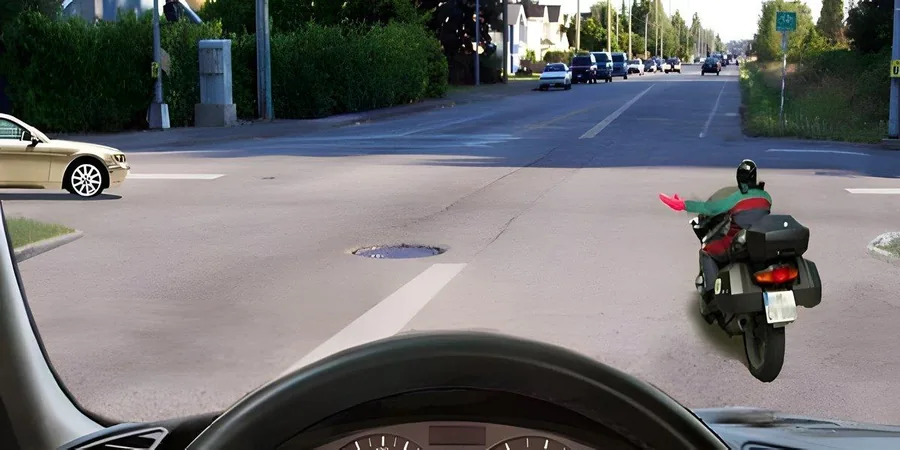
What does the hand signal given by the motorcycle operator indicate?
-
The motorcycle will proceed to the left or make a U-turn.
(Correct answer)
-
The motorcycle will proceed straight ahead or to the right.
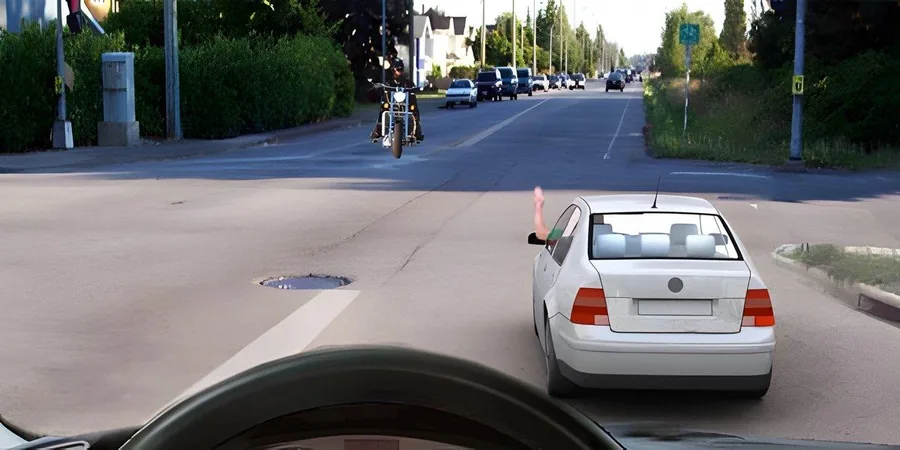
What does the hand signal given by the passenger-car driver indicate?
-
The driver is making a right turn.
(Correct answer)
-
The driver is continuing straight ahead.
-
The driver is braking in order to yield to the motorcycle.
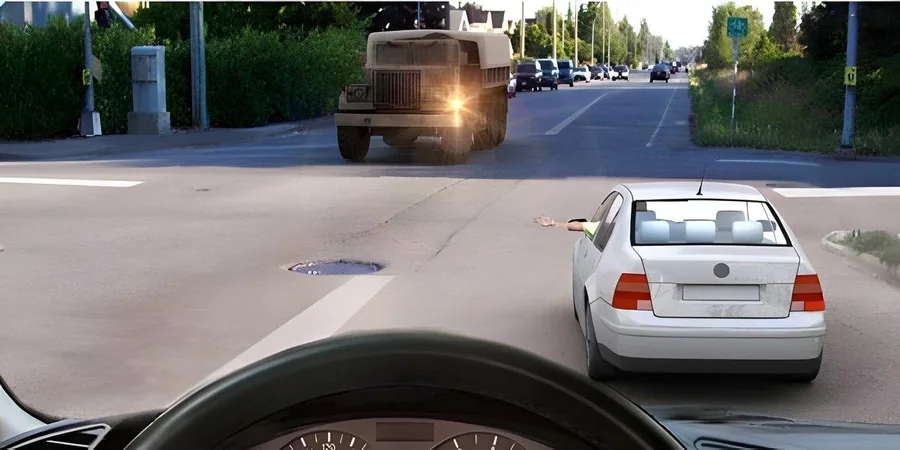
What does the hand signal given by the passenger-car driver indicate?
-
The driver intends to make a left turn or a U-turn.
(Correct answer)
-
The driver is braking in order to yield to the truck.
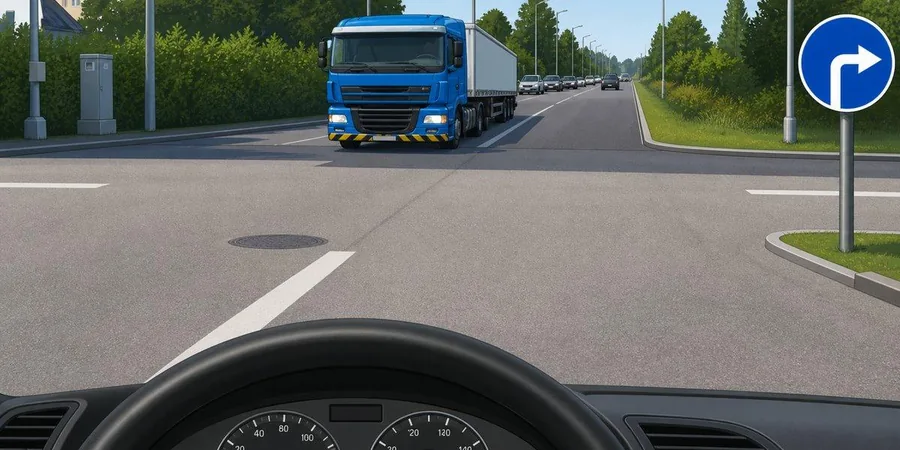
In this case, must the driver activate the turn signal?
-
Yes.
(Correct answer)
-
No.
During daylight, when transporting organized groups of children, a bus must have the following activated:
-
High-beam headlights.
-
Low-beam headlights.
(Correct answer)
-
Hazard warning lights.
-
Interior passenger-compartment lighting.
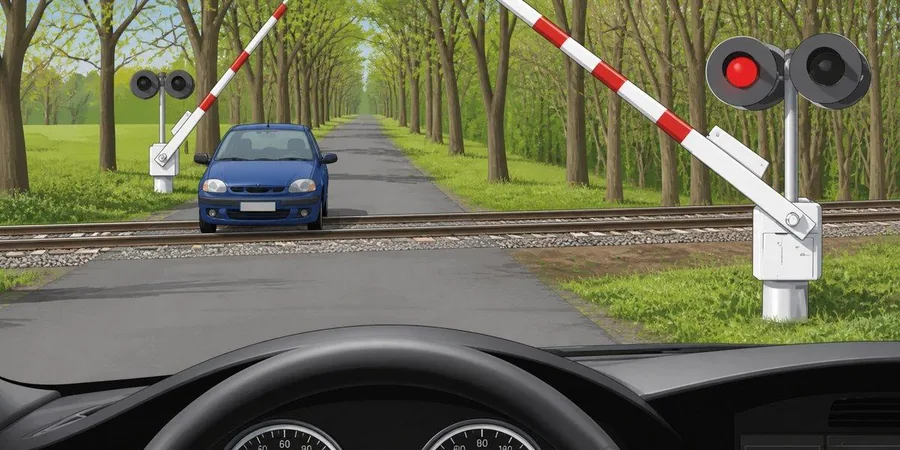
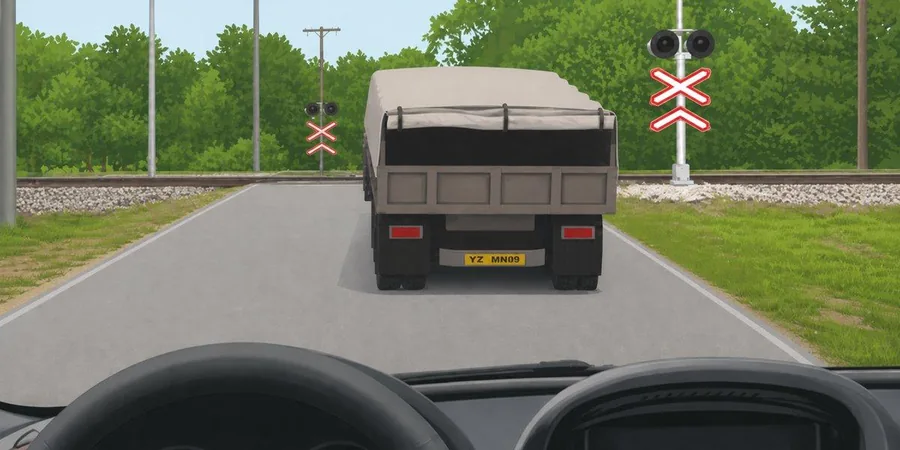
Is it permitted to enter the railroad crossing in this situation?
-
Permitted.
-
Prohibited.
(Correct answer)
Is it permitted to enter the railroad crossing in this situation?
-
Permitted if no train is approaching.
-
Permitted if the barrier gate is open.
-
Prohibited.
(Correct answer)
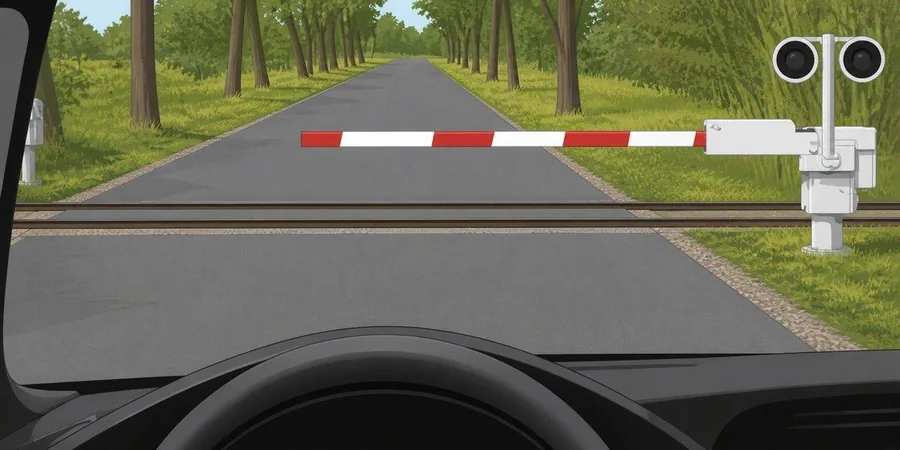
What should the driver do in this situation?
-
If no train is approaching, go around the barrier gate and continue.
-
Stop and wait for the barrier gate to open.
(Correct answer)
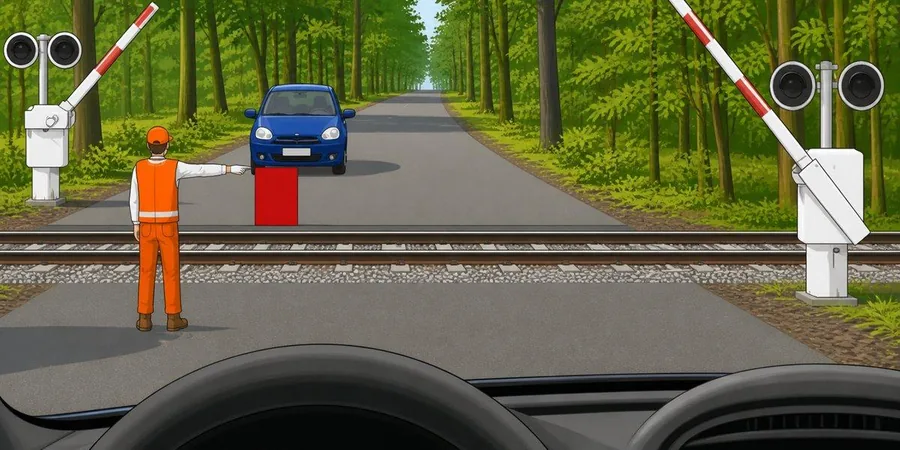
In this situation, is it permitted to cross the railroad crossing?
-
Permitted if no train is approaching.
-
Permitted.
-
Prohibited.
(Correct answer)
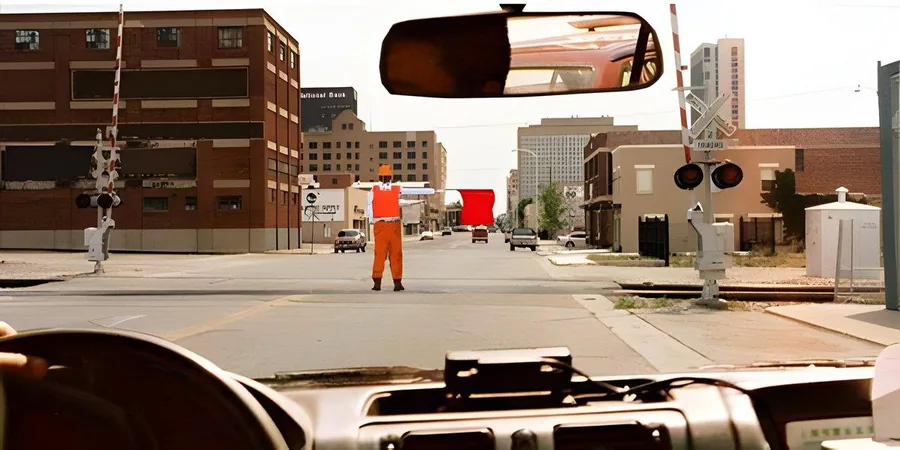
In this situation, is it permitted to cross the railroad crossing?
-
Prohibited.
(Correct answer)
-
Permitted if no train is approaching.
-
Permitted because the railroad crossing attendant is prohibiting the oncoming vehicle from crossing.
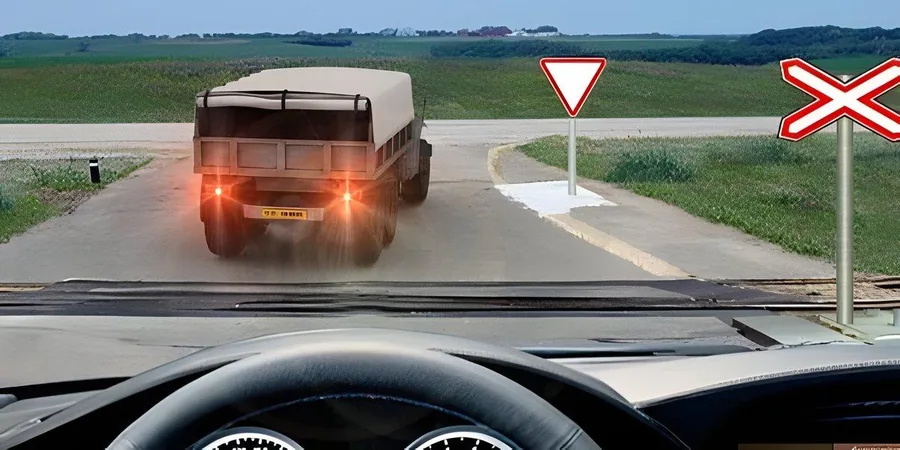
In this situation, where may passing be started?
-
At the railroad crossing.
-
After crossing the railroad crossing.
(Correct answer)
-
After proceeding 100 m beyond the railroad crossing.
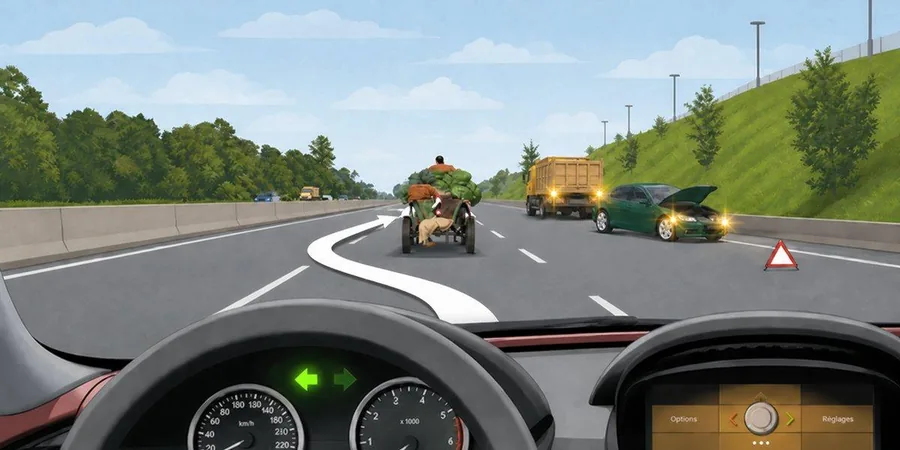
In this situation, is passing permitted?
-
Permitted because there is no oncoming vehicle.
-
Prohibited.
(Correct answer)
-
Permitted if the animal-drawn cart is moving at a speed below 30 km/h.
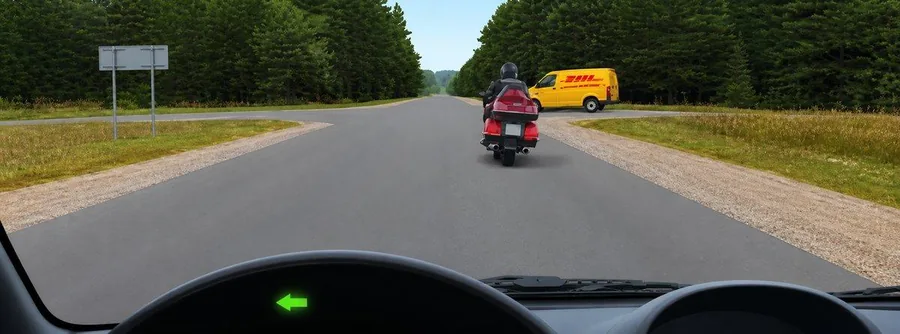
Is passing the motorcycle permitted?
-
Permitted.
-
Prohibited.
(Correct answer)
On a road with one lane in each direction, when is passing in the oncoming traffic lane permitted?
-
Only when the oncoming traffic lane is clear for a sufficient distance.
-
Only when no vehicle is passing us.
-
Both conditions must be met.
(Correct answer)
Is passing permitted in the indicated situation?
-
Prohibited.
-
Permitted if the maneuver can be completed within the visible section of the road.
-
Permitted.
(Correct answer)
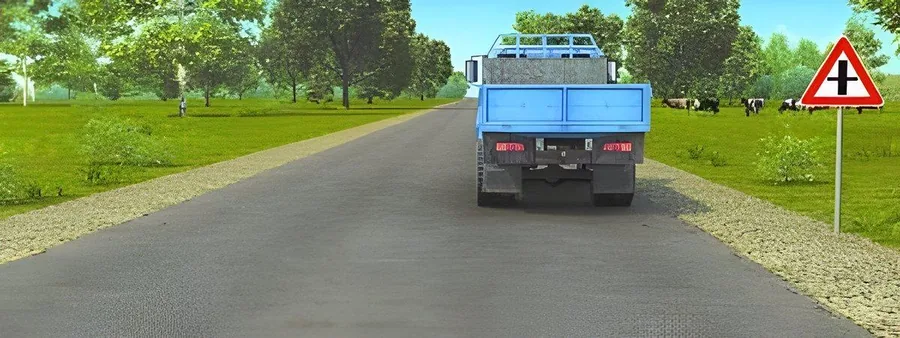
Is passing the truck permitted?
-
Yes.
-
Yes, if the passing maneuver is completed before the intersection.
(Correct answer)
-
No.
What is required of the driver of the vehicle being passed?
-
The driver must yield to the passing vehicle.
-
The driver must not interfere with the passing vehicle by increasing speed or by taking any other action.
(Correct answer)
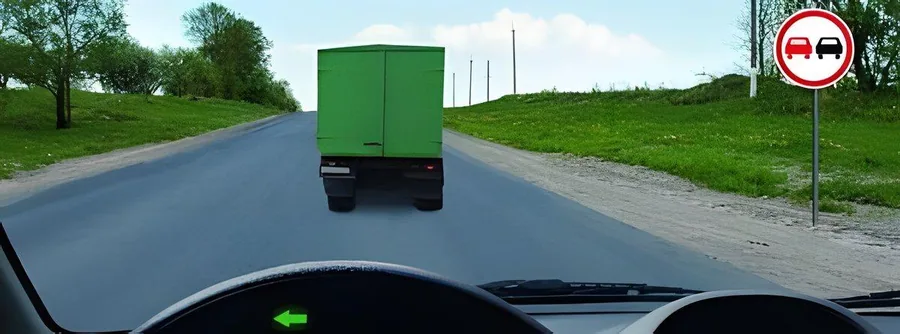
Is passing permitted in this situation?
-
Prohibited.
(Correct answer)
-
Permitted if the truck is moving at less than 30 km/h.
-
Permitted.
Passing at a pedestrian crossing is:
-
Prohibited only when pedestrians are present.
-
Prohibited.
(Correct answer)
-
Permitted.