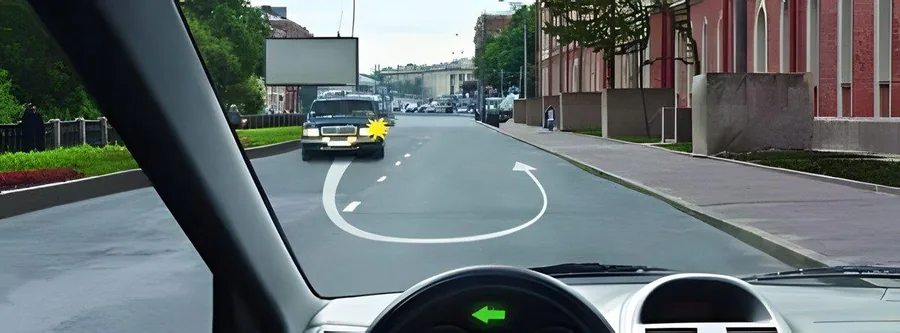
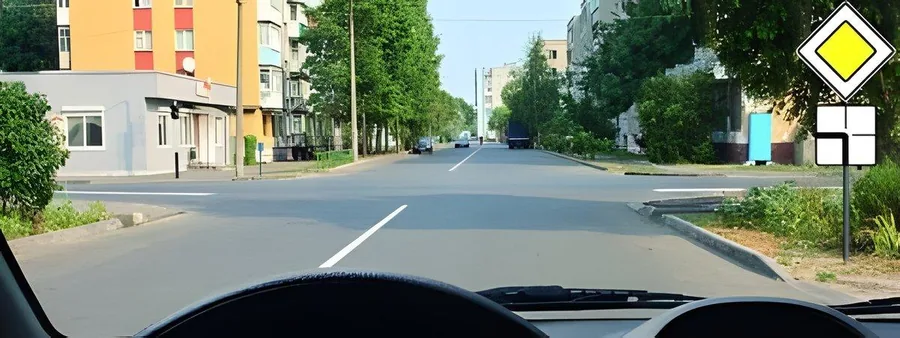
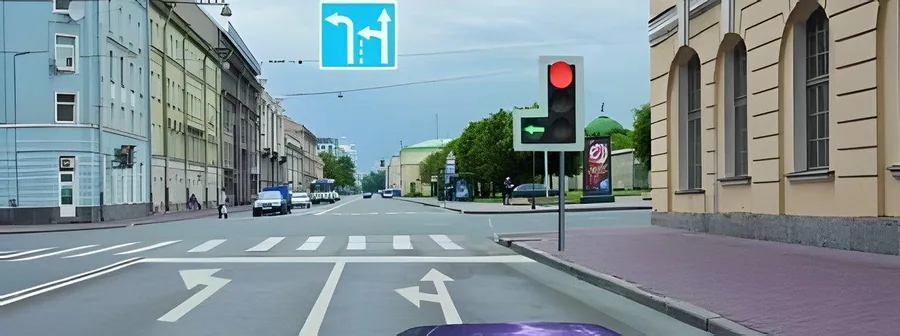
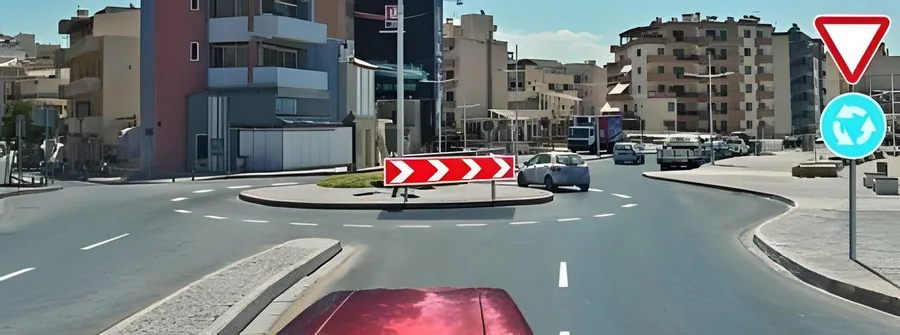
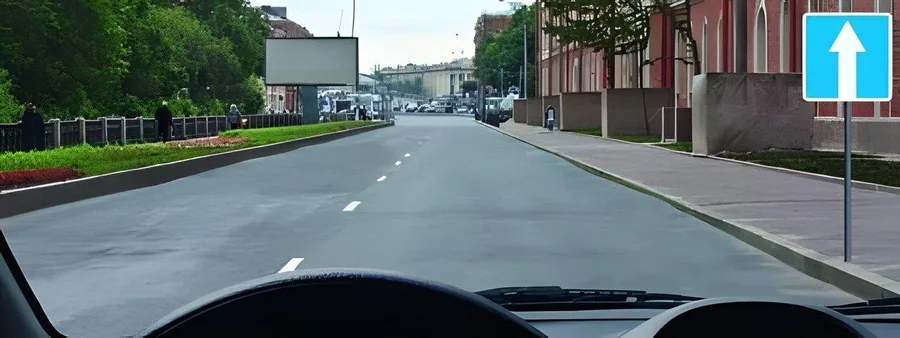
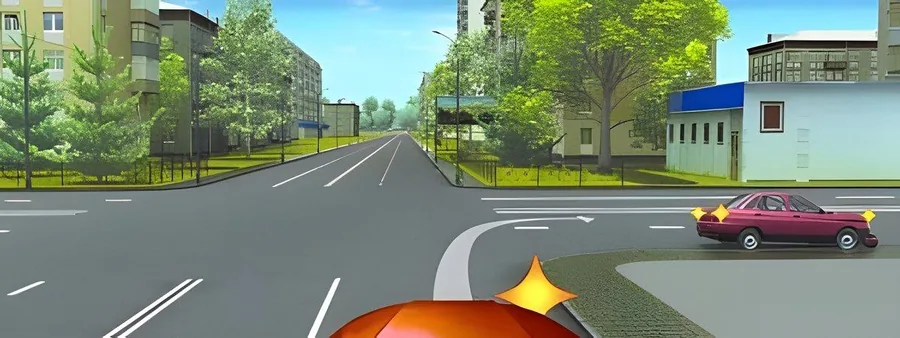
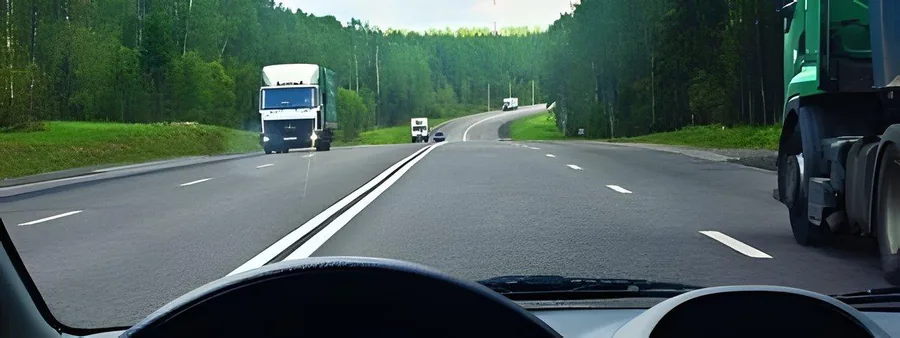
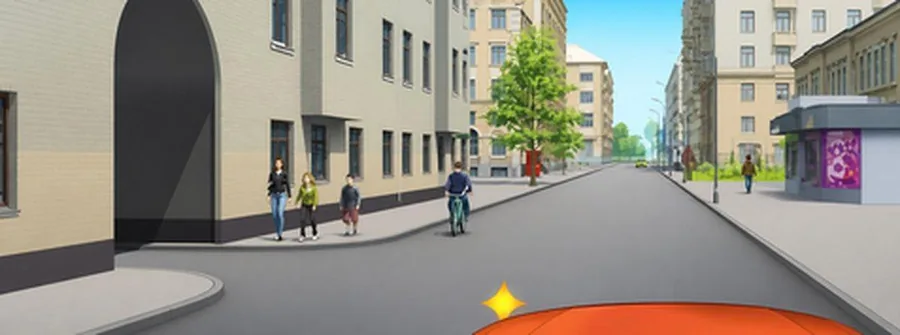
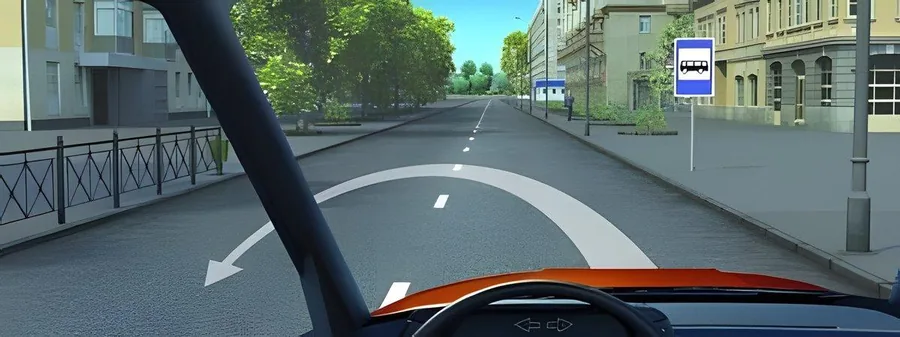
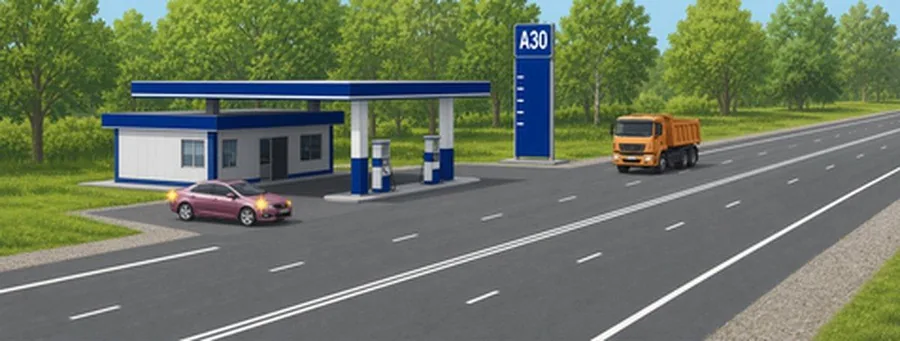
When making a left turn or U-turn outside an intersection, you must:
-
Yield to oncoming vehicles.
-
Yield to oncoming vehicles and to trams proceeding in the same direction.
(Correct answer)
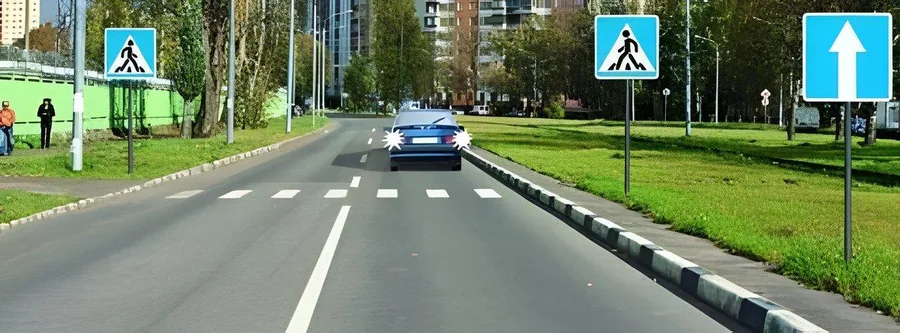
Is driving in reverse permitted in this situation?
-
Prohibited.
(Correct answer)
-
Permitted up to the pedestrian crossing.
When starting to move, must you yield to the driver making a U-turn?
-
Yes.
(Correct answer)
-
No.
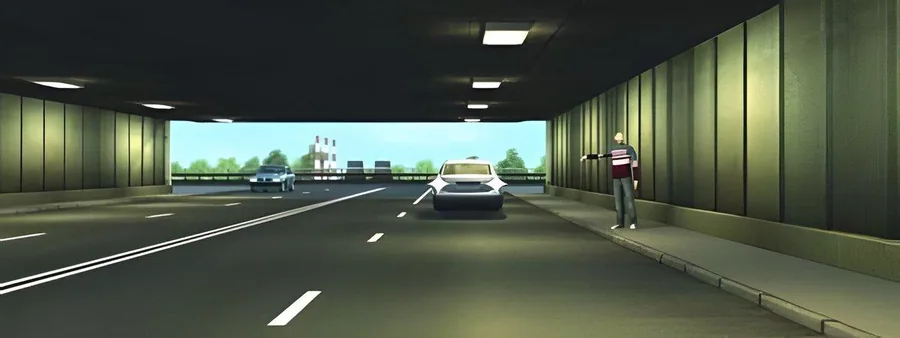
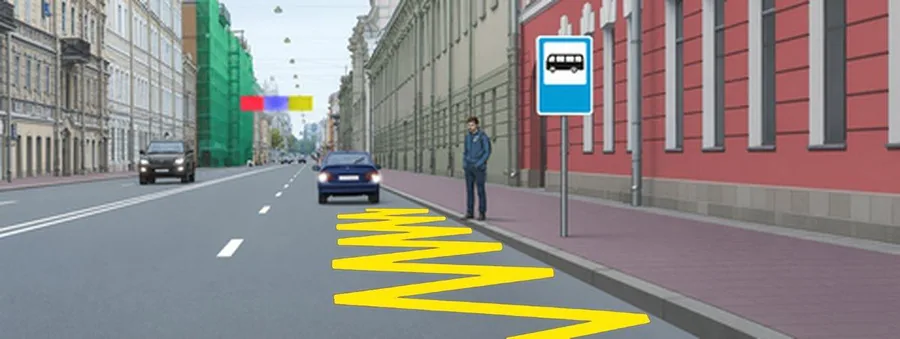
In this situation, approaching the passenger by driving in reverse is:
-
Permitted.
-
Permitted if it does not interfere with other drivers.
-
Prohibited.
(Correct answer)
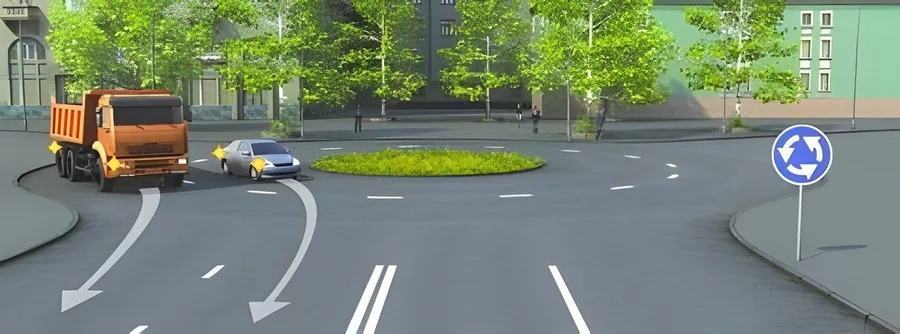
Which driver violates the traffic rules when exiting the roundabout?
-
The passenger-car driver.
(Correct answer)
-
Both drivers violate the rules.
-
Neither driver violates the rules.
A U-turn at this intersection is:
-
Permitted.
(Correct answer)
-
Prohibited.
In which direction is traffic permitted?
-
To the left only.
(Correct answer)
-
Straight ahead and to the left.
-
To the left and by making a U-turn.
Must you activate the right turn signal at this intersection?
-
Yes.
(Correct answer)
-
No.
-
Yes, except when making a U-turn.
When entering an adjacent area, the driver must yield to:
-
Pedestrians only.
-
Bicyclists only.
-
Bicyclists and must not interfere with pedestrians.
(Correct answer)
When exiting an adjacent area, the driver must yield to:
-
Pedestrians only.
-
Vehicles proceeding on the road.
-
Vehicles proceeding on the road and must not interfere with pedestrians.
(Correct answer)
After this sign, making a U-turn is permitted:
-
Only if visibility is at least 100 m in both directions.
-
If it does not create an obstruction.
-
Under no circumstances.
(Correct answer)
Giving a signal:
-
Gives the driver right-of-way over other road users.
-
Gives the driver right-of-way only when changing lanes.
-
Does not give the driver right-of-way over other road users.
(Correct answer)
The right turn along the indicated path is:
-
Permitted.
(Correct answer)
-
Prohibited.
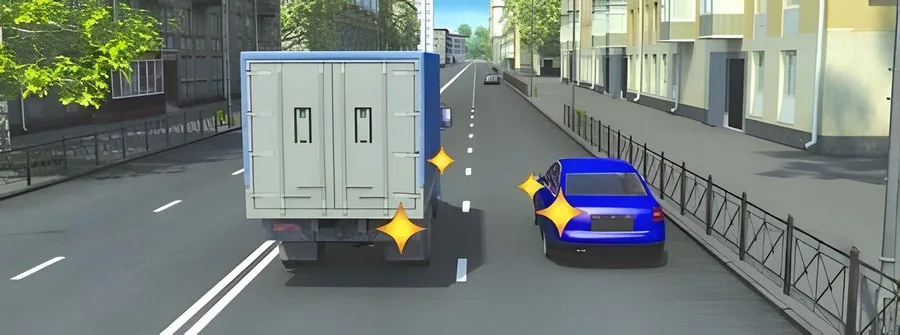
After passing the truck, in which lane is it permitted to continue?
-
Only in the right lane.
(Correct answer)
-
In either lane proceeding in the same direction.
When turning into the yard, you must:
-
Yield to the bicyclist.
-
Not obstruct pedestrians.
-
Both answers are correct.
(Correct answer)
A U-turn at the indicated location is:
-
Permitted.
-
Permitted if no public transit vehicles are present.
-
Prohibited.
(Correct answer)
If visibility of 100 m is provided in both directions, is it permitted to make a U-turn along the indicated path?
-
No.
(Correct answer)
-
Yes.
The right-of-way belongs to:
-
The passenger-car driver.
-
The truck driver.
(Correct answer)
When changing lanes simultaneously, which vehicle driver has the right-of-way?
-
The truck driver.
-
The passenger-car driver.
(Correct answer)
Is it permitted to approach the passenger by driving in reverse?
-
Yes.
-
No.
(Correct answer)