A U-turn is prohibited:
-
On pedestrian crossings and in tunnels.
-
On and under bridges, overpasses, and elevated roadways.
-
At railroad crossings.
-
At locations where visibility in at least one direction of the road is less than 100 m.
-
In all of the listed cases.
(Correct answer)
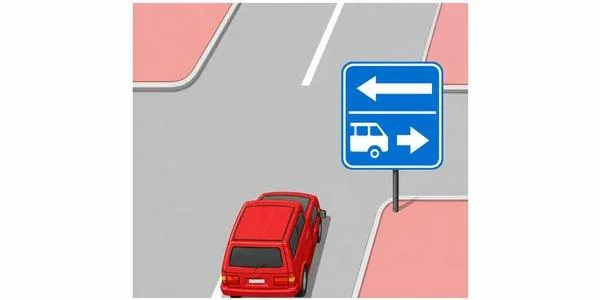
In which directions is traffic permitted?
-
To the left only.
-
Straight ahead, to the left, and by making a U-turn.
(Correct answer)
-
Straight ahead only.
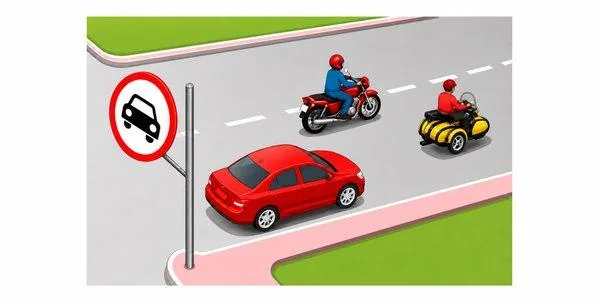
Which vehicle drivers have violated the requirements of the traffic sign?
-
The motorcycle operators.
-
The automobile driver and the operator of the motorcycle with a sidecar.
-
Only the automobile driver.
-
The drivers of all the vehicles.
(Correct answer)
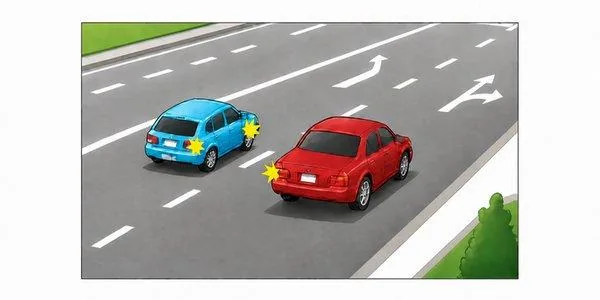
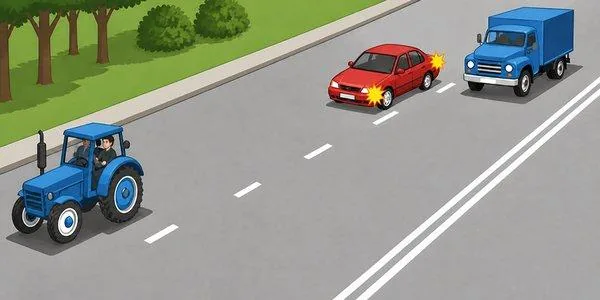
When vehicles moving in the same direction change lanes simultaneously, which driver must yield?
-
The driver of the vehicle on the left.
(Correct answer)
-
The driver of the vehicle on the right.
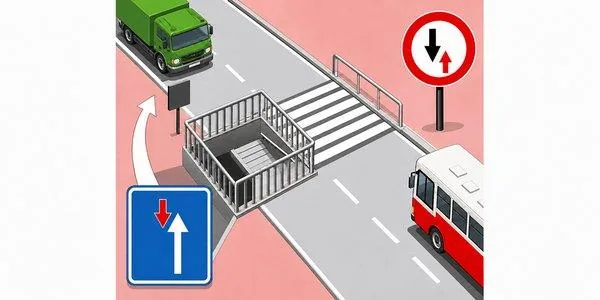
Which vehicle driver has the right-of-way?
-
The truck driver.
(Correct answer)
-
The bus driver.
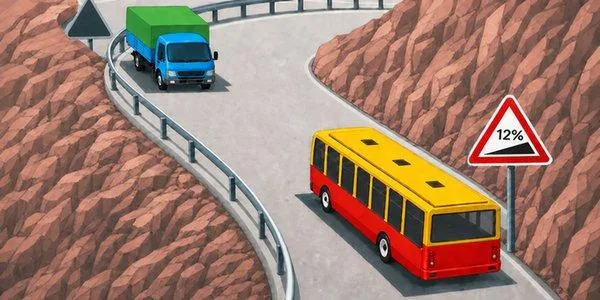
On road sections with longitudinal grades indicated by the appropriate signs, if oncoming traffic is difficult, you must yield to:
-
The vehicle proceeding downhill.
-
The public transit vehicle.
-
The vehicle proceeding uphill.
(Correct answer)
Which vehicle has the right-of-way?
-
The blue vehicle, because the red vehicle is changing its direction of movement to the left.
-
The red vehicle, because during simultaneous lane changes it is on the right.
(Correct answer)
-
The blue vehicle, because during simultaneous lane changes it is on the left.
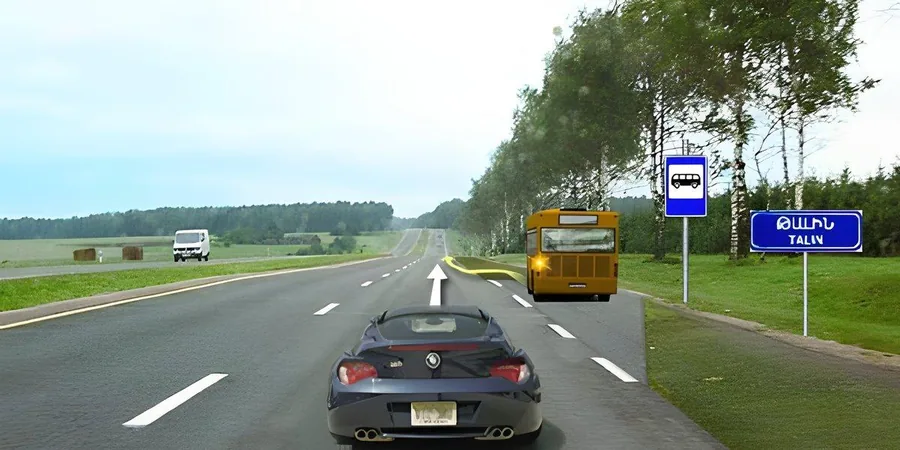
In populated areas, must drivers yield to public transit vehicles that are starting to move from designated and marked stops?
-
Yes.
(Correct answer)
-
No.
Which vehicle driver must yield?
-
The passenger-car driver.
(Correct answer)
-
The truck driver.
Which vehicle driver must yield?
-
The bus driver.
-
The automobile driver.
(Correct answer)
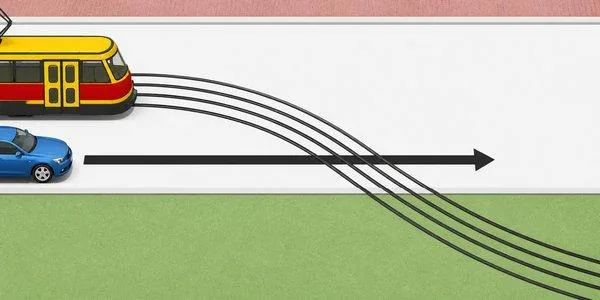
Which vehicle driver must yield?
-
The automobile driver.
(Correct answer)
-
The tram operator.
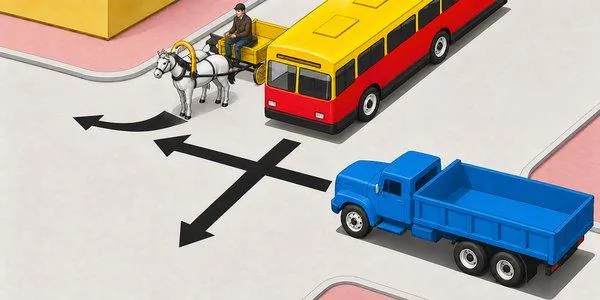
Indicate the order in which the vehicles should proceed through the intersection:
-
The bus, the truck, then the animal-drawn cart.
-
The bus and the animal-drawn cart, then the truck.
(Correct answer)
With oncoming traffic on a steep downgrade, you must yield to:
-
The public transit vehicle.
-
The vehicle proceeding uphill.
(Correct answer)
-
The vehicle proceeding downhill.
In populated areas, where there are three or more lanes for traffic in the same direction, are passenger cars permitted to use the far-left lane?
-
Permitted when overtaking.
-
Permitted when turning left or making a U-turn.
-
Permitted in both of the above cases.
(Correct answer)
On all roads, where there are three or more lanes for traffic in the same direction, are motorcycles permitted to use the far-left lane?
-
Permitted when overtaking.
-
Permitted when turning left or making a U-turn.
-
Permitted in both of the above cases.
(Correct answer)
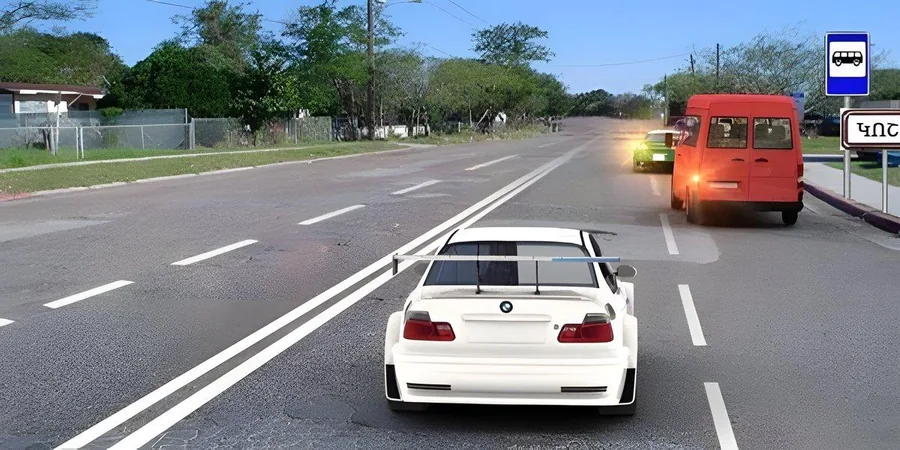
In this situation, the driver of the white passenger car:
-
Must yield to the fixed-route bus that is starting to move from the designated stop.
(Correct answer)
-
Has the right-of-way because the fixed-route bus is changing lanes into the second lane.
Which vehicle driver has the right-of-way?
-
The passenger-car driver.
(Correct answer)
-
The fixed-route bus driver.
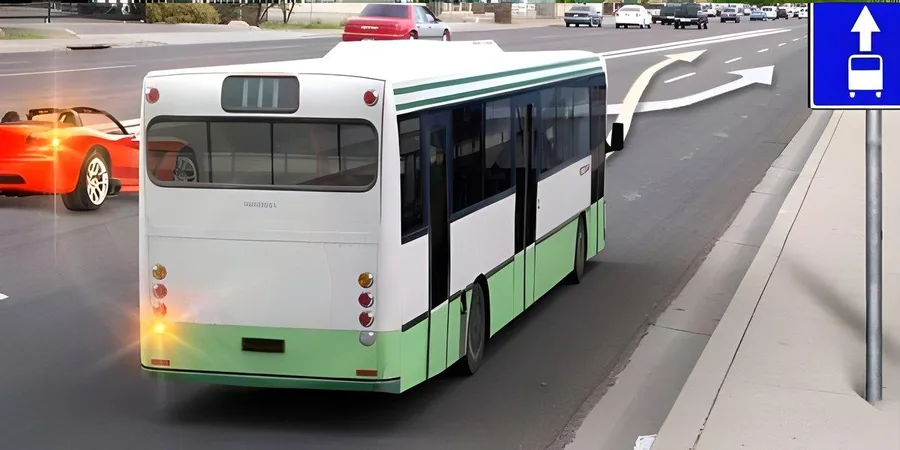
Which vehicle driver has the right-of-way in this situation?
-
The bus driver.
(Correct answer)
-
The passenger-car driver.
-
The passenger-car driver is not permitted to enter the right lane.
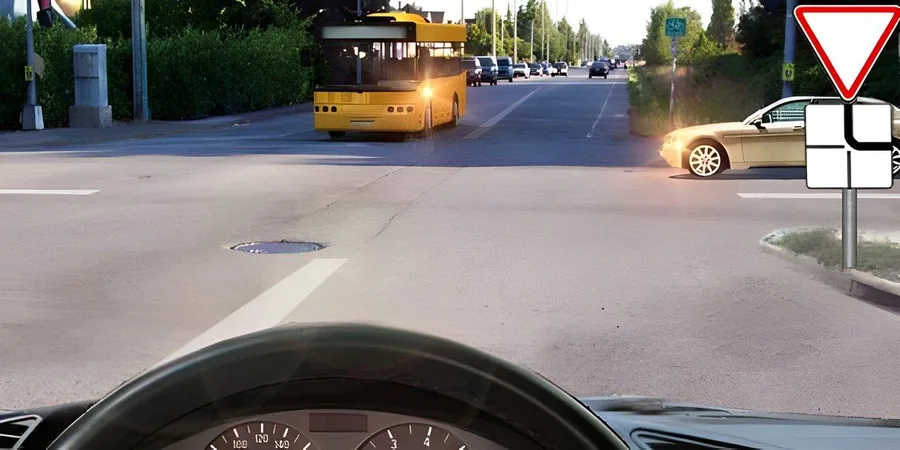
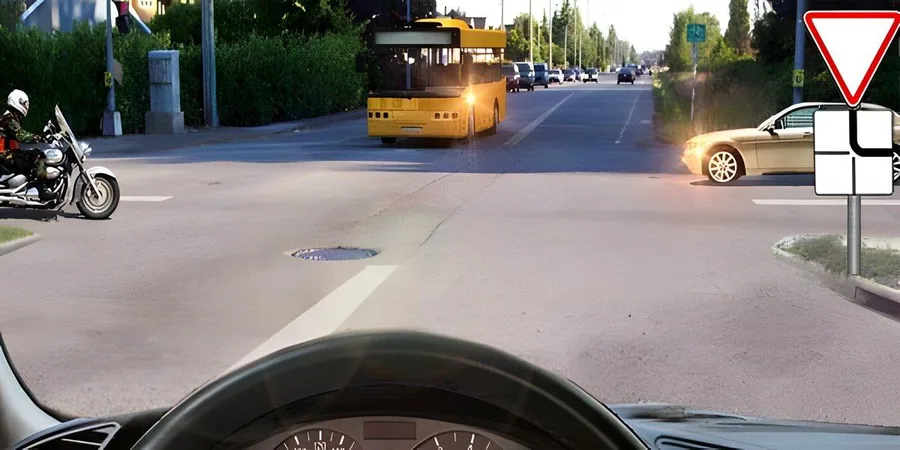
If you intend to proceed straight ahead, to which vehicle or vehicles must you yield?
-
Both vehicles.
(Correct answer)
-
Only the bus.
-
Only the passenger car.
-
Neither vehicle.
If you intend to proceed straight ahead, to whom must you yield?
-
Only the passenger car.
-
Only the bus and the passenger car.
(Correct answer)
-
All vehicles.
-
Only the motorcycle.