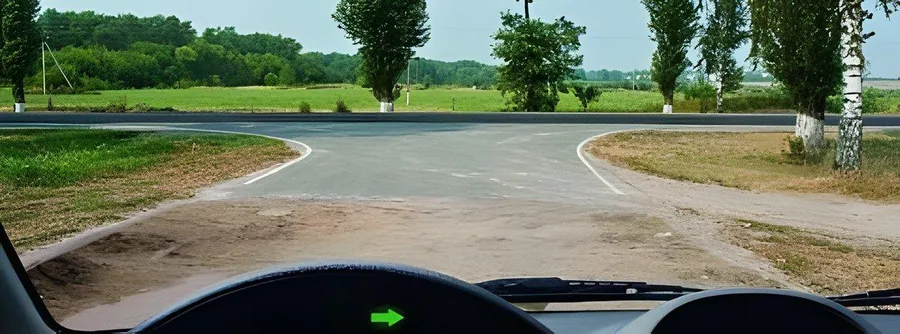
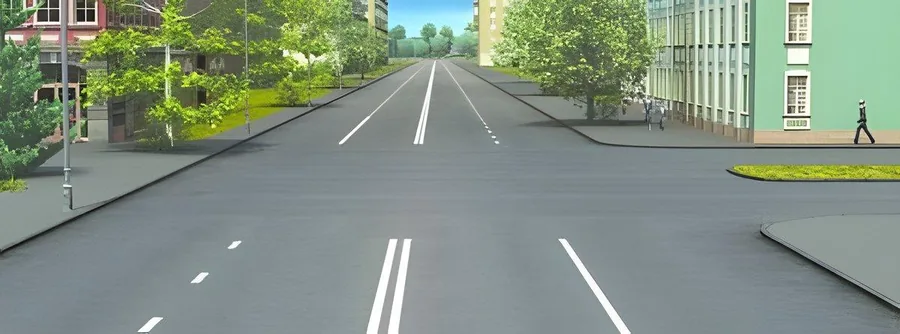
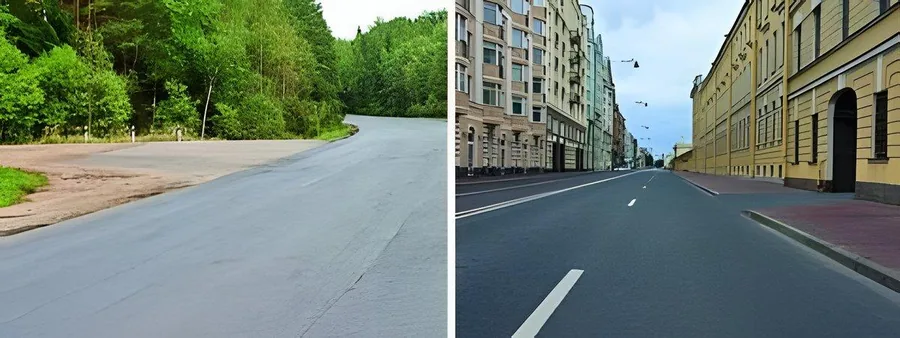
When entering a road with an asphalt-concrete surface from an unpaved road, the asphalt-concrete road:
1
Must be considered the priority road.
(Correct answer)
2
Must be considered a road of equal priority.
42
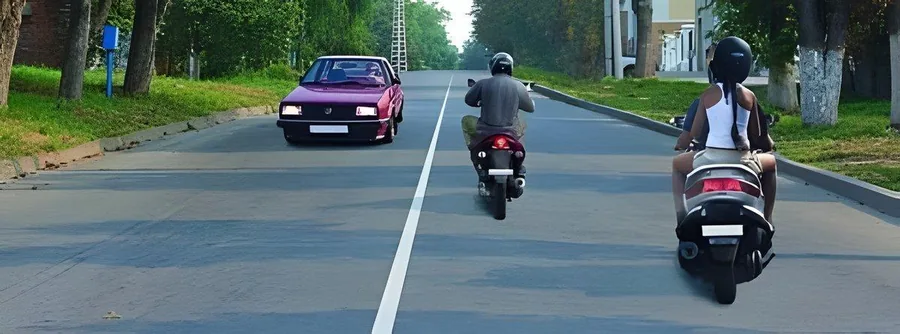
How many traffic lanes are there on this roadway?
1
One.
2
Two.
(Correct answer)
3
Three.
43
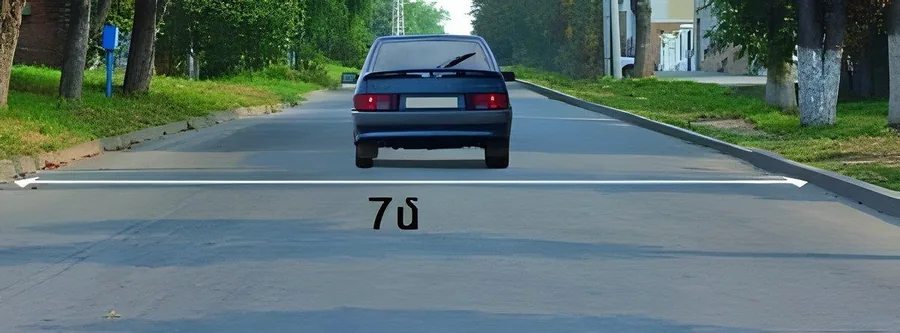
Under the indicated roadway width, is it permitted to proceed along the center of the roadway?
1
Yes.
2
Yes, when there is no oncoming traffic.
3
No.
(Correct answer)
44
Which of the following stationary objects is not considered an obstruction?
1
Damage to the roadway surface.
2
A foreign object.
3
A disabled or stationary automobile.
4
An automobile stopped because of traffic congestion.
(Correct answer)
45
Are the sidewalk and shoulders considered part of the road?
1
Yes.
(Correct answer)
2
Only the shoulder.
3
No.
46
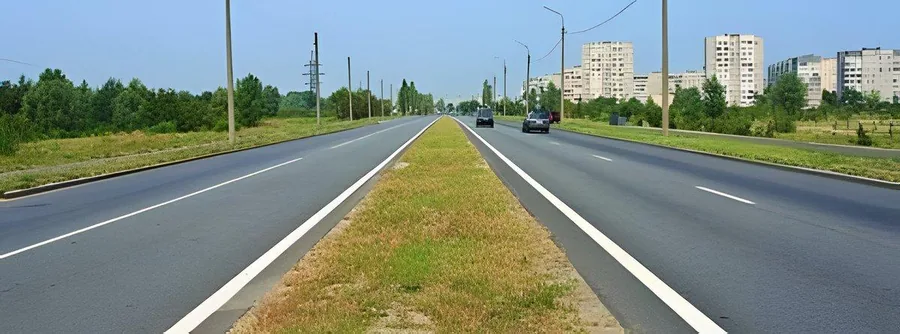
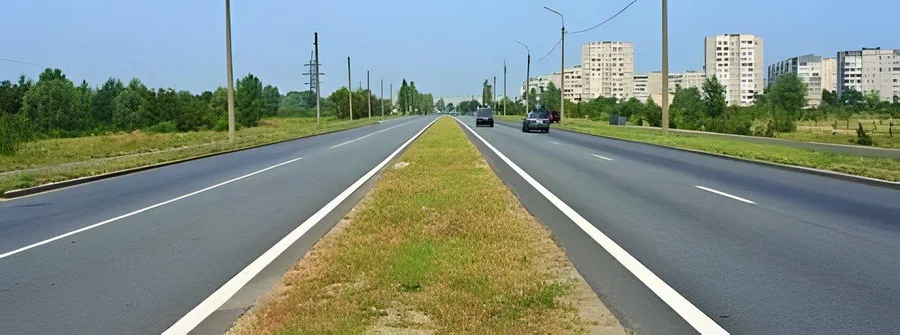
How many roadways does this road have?
1
One.
2
Two.
(Correct answer)
3
Four.
47
How many intersections are shown in this image?
1
One.
(Correct answer)
2
Two.
3
Four.
48
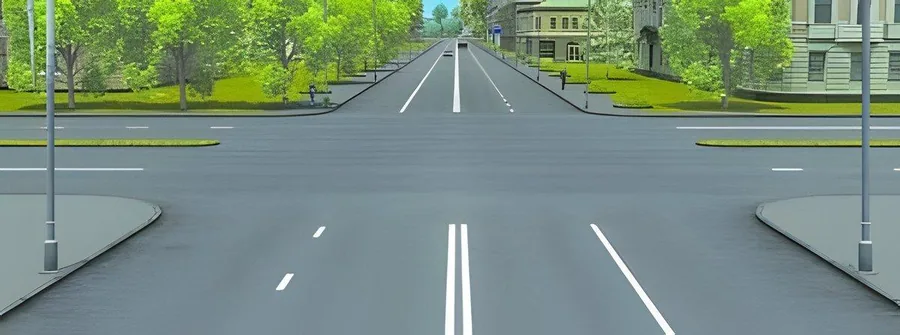
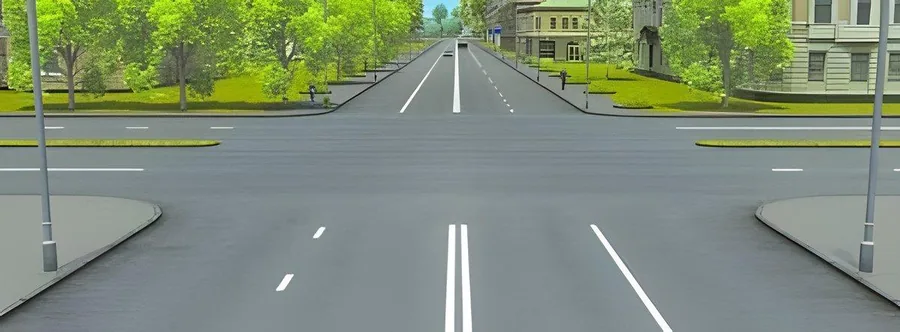
How many intersections of roadways are there at this intersection?
1
One.
2
Two.
(Correct answer)
49
How many traffic lanes does this road have?
1
Two.
2
Four.
(Correct answer)
50
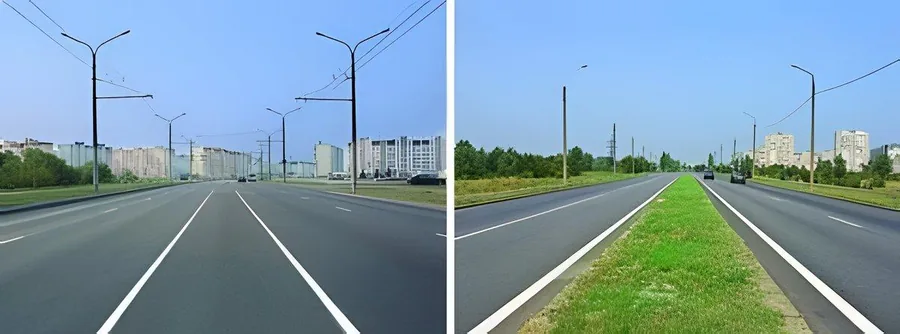
In which image does the road have a median?
1
Only in the right image.
2
In both images.
(Correct answer)
3
Only in the left image.
51
To yield to other vehicles means that:
1
The driver must not continue or resume driving or perform any maneuver if doing so could force the drivers of other vehicles to change direction or speed.
2
The driver must not continue or resume driving or perform any maneuver if doing so could force the drivers of other vehicles to unexpectedly change direction or speed.
(Correct answer)
3
The driver must stop the vehicle unconditionally.
52
In which image is an intersection shown?
1
Only in the left image.
(Correct answer)
2
Only in the right image.
3
In both images.
53
How many intersections of roadways are there at the intersection?
1
One.
2
Two.
(Correct answer)
3
Four.
54
A lane change means:
1
Leaving the traffic lane occupied by the vehicle while maintaining the original direction of movement.
2
Leaving the row occupied by the vehicle within a marked traffic lane while maintaining the original direction of movement.
3
Both of the listed cases.
(Correct answer)
55
A turn means:
1
A maneuver performed for the purpose of entering another road.
2
A maneuver performed for the purpose of entering another road or an adjacent area from the road.
(Correct answer)
56
A U-turn means:
1
Driving a vehicle in the opposite direction.
2
A maneuver performed for the purpose of changing the vehicle’s direction of movement to the opposite direction.
(Correct answer)
57
Passing without leaving the lane means:
1
Proceeding ahead of one or more moving vehicles without leaving the occupied lane.
(Correct answer)
2
Proceeding ahead of one or more moving vehicles by leaving the occupied lane.
58
Starting to move means:
1
The moment a vehicle begins moving from a stopping or parking location, with or without changing to an adjacent traffic lane.
(Correct answer)
2
The moment a vehicle begins moving from a stopping or parking location while changing to an adjacent traffic lane.
59
Maneuvering means:
1
Starting to move a vehicle (involving entry into an adjacent traffic lane), changing lanes, changing direction, stopping (with a lane change), and backing.
(Correct answer)
2
Starting to move a vehicle, changing lanes, changing direction, stopping, and backing.
60
According to the Law of the Republic of Armenia on Ensuring Road Traffic Safety, a truck is:
1
An automobile designed by its construction and equipment for the transportation of cargo.
(Correct answer)
2
An automobile weighing more than 3.5 metric tons and designed by its construction and equipment for the transportation of cargo.