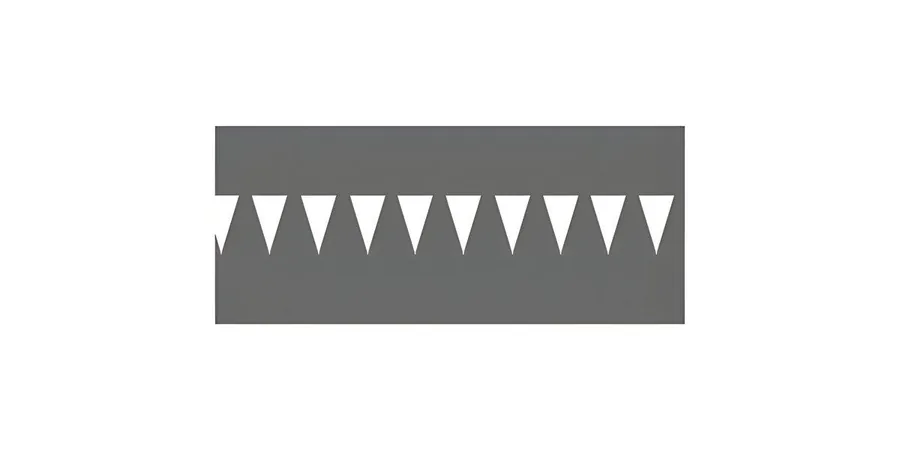
1
A narrowing of the roadway where the number of traffic lanes in the given direction decreases.
2
A location where the driver must stop, if necessary, to yield to vehicles proceeding on the intersecting road.
(Correct answer)
3
An approach to a location where stopping is prohibited.
22
Is it permitted to enter a channelizing island marked with wide white lines?
1
Permitted only for stopping.
2
Permitted when backing.
3
Prohibited.
(Correct answer)
23
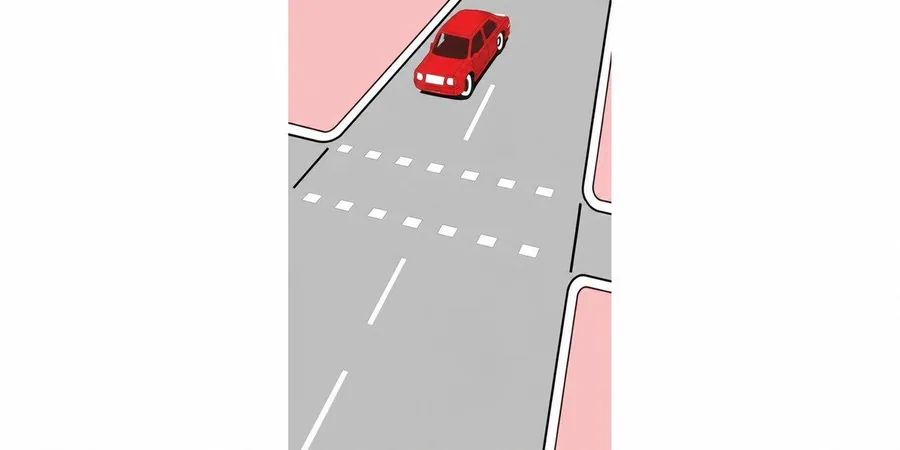
What should the driver do when approaching an intersection with a “Stop Line” pavement marking and a green traffic signal?
1
Stop at the “Stop Line” and then resume driving.
2
Proceed through the intersection without stopping.
(Correct answer)
24
What does this pavement marking indicate?
1
A pedestrian crossing.
2
A location where a bicycle path crosses the roadway.
(Correct answer)
3
A location designated for driving livestock across the road.
25
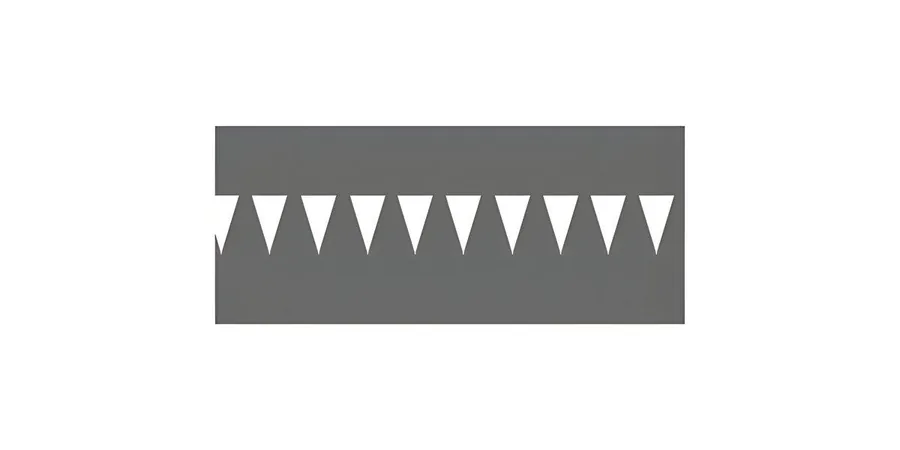
Where must the driver stop the vehicle when this pavement marking is present?
1
At the pavement marking.
(Correct answer)
2
On the pavement marking.
3
At least 5 m before the pavement marking.
26
What does this pavement marking mean?
1
A traffic lane designated for public transit vehicles.
2
A traffic lane designated for special-purpose vehicles.
3
It indicates the boundaries of traffic lanes where reversible traffic control is in effect.
(Correct answer)
27
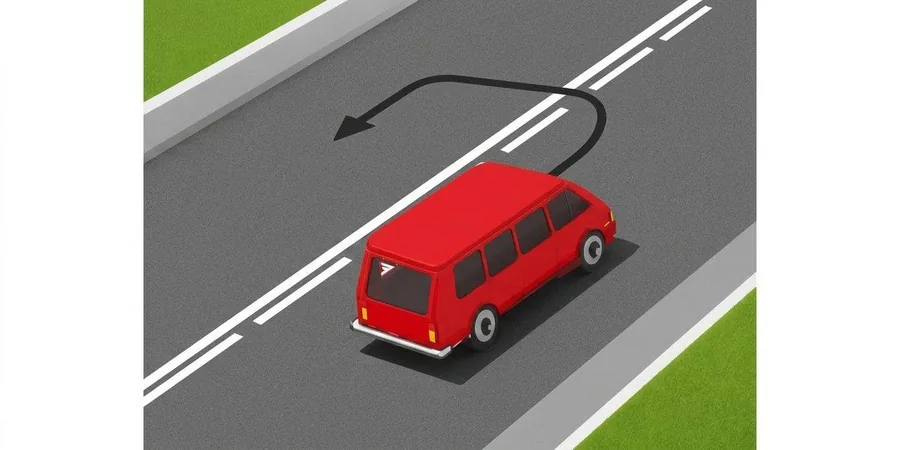
Is it permitted to make a U-turn at the indicated location?
1
Permitted.
(Correct answer)
2
Prohibited.
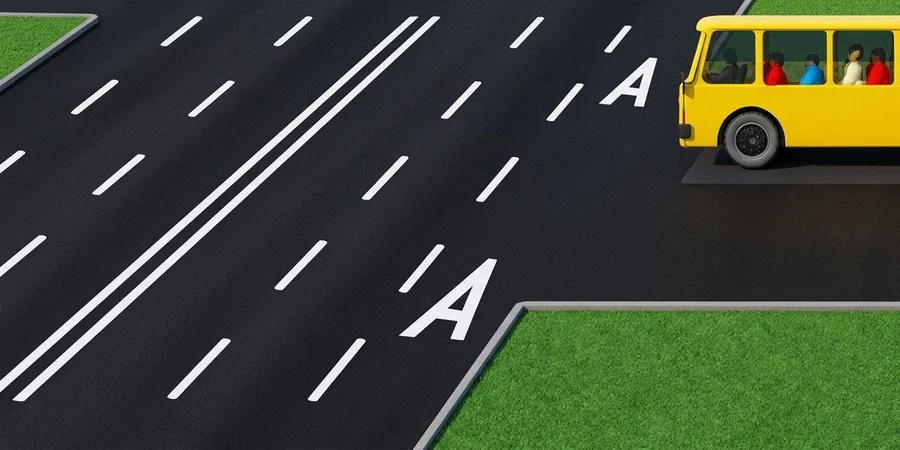
28
When this pavement marking is present, is the driver of a bus operating on a tourist route permitted to enter the lane marked “A”?
1
Permitted.
(Correct answer)
2
Prohibited.
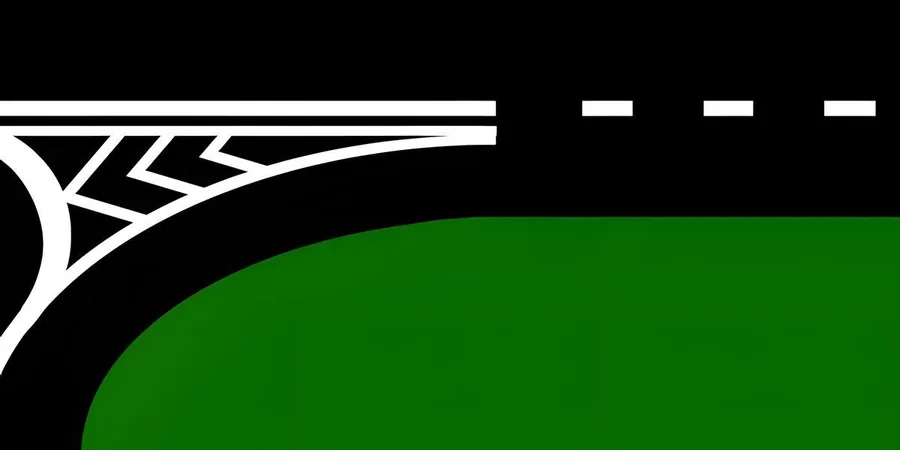
29
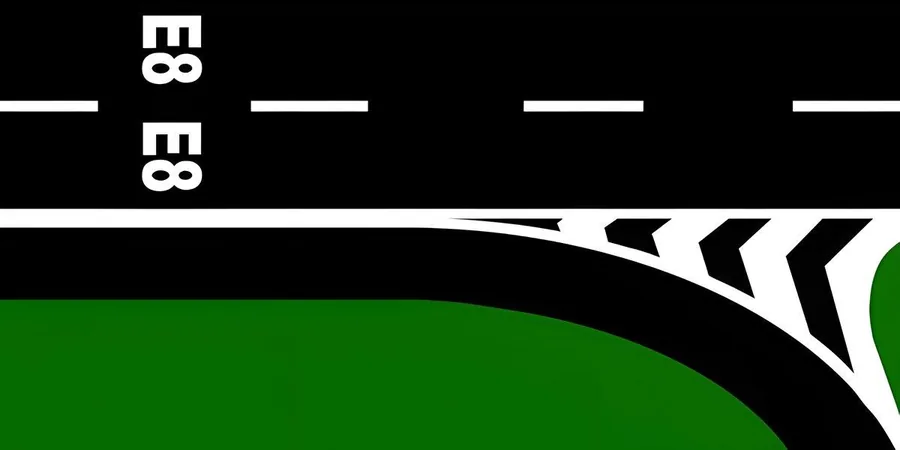
What does the wide broken-line pavement marking indicate?
1
The boundary between the roadway and the shoulder.
2
The boundary between a main traffic lane of the roadway and an acceleration lane.
(Correct answer)
3
The boundary between a main traffic lane of the roadway and a deceleration lane.
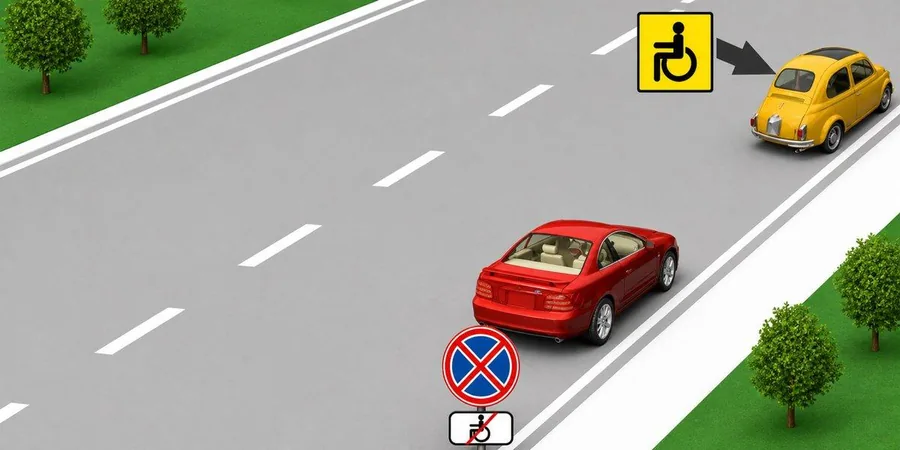
30
Which automobile is permitted to stop within the area where these signs are in effect?
1
The red automobile.
2
Both automobiles.
3
Neither automobile.
4
The yellow automobile displaying the “Disabled” identification sign.
(Correct answer)
31
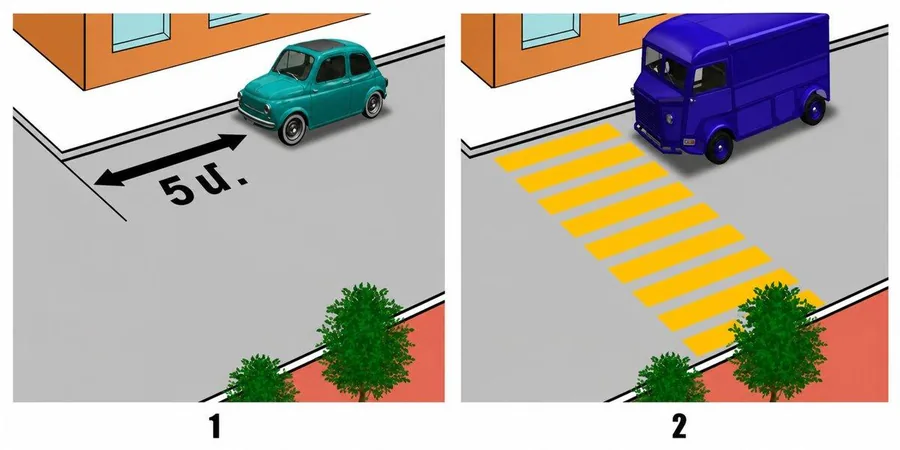
In which image has the driver stopped correctly to drop off passengers?
1
In the left image.
(Correct answer)
2
In both images.
3
In the right image.
32
The signal to stop a train is:
1
A circular motion of the arm (during daylight, with a brightly colored cloth or another clearly visible object; at night, with a torch or lantern).
(Correct answer)
2
An arm raised above the head holding a disk or red flag.
3
An arm extended forward.
4
An arm extended forward and moved up and down.
33
In populated areas, on roads with one traffic lane in each direction and no tram tracks in the center, stopping and parking on the left side of the road are:
1
Permitted.
(Correct answer)
2
Prohibited.
34
At what distance from the “Stop Line” or the “STOP” sign must a vehicle be stopped in order to yield to an approaching train?
1
1.5 m.
2
2.5 m.
3
5 m.
4
10 m.
5
Immediately at the “Stop Line” and/or the sign.
(Correct answer)
35
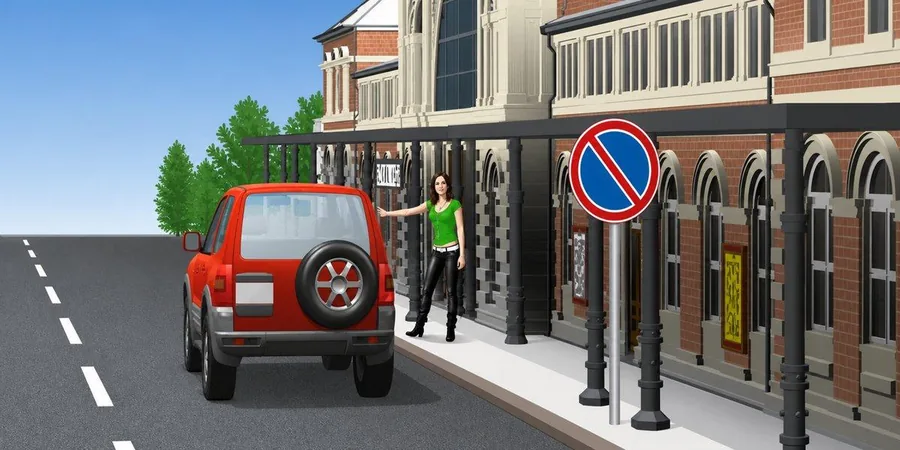
Is stopping at the indicated location permitted?
1
Permitted.
2
Prohibited.
(Correct answer)
36
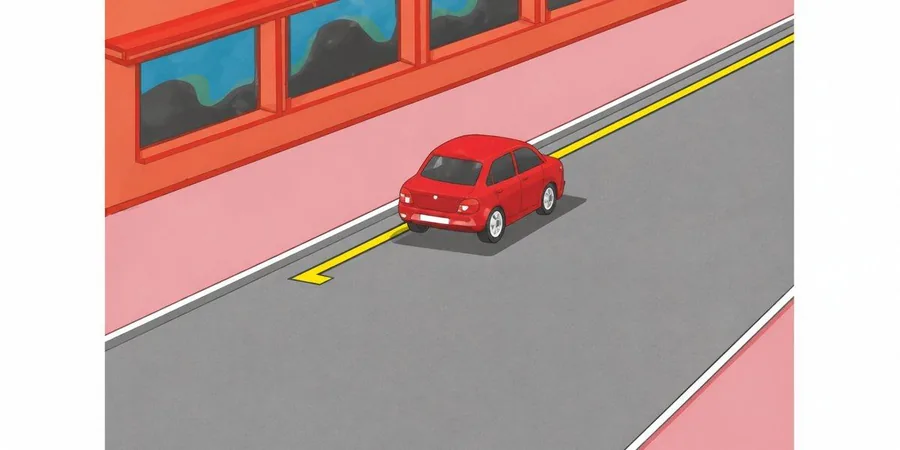
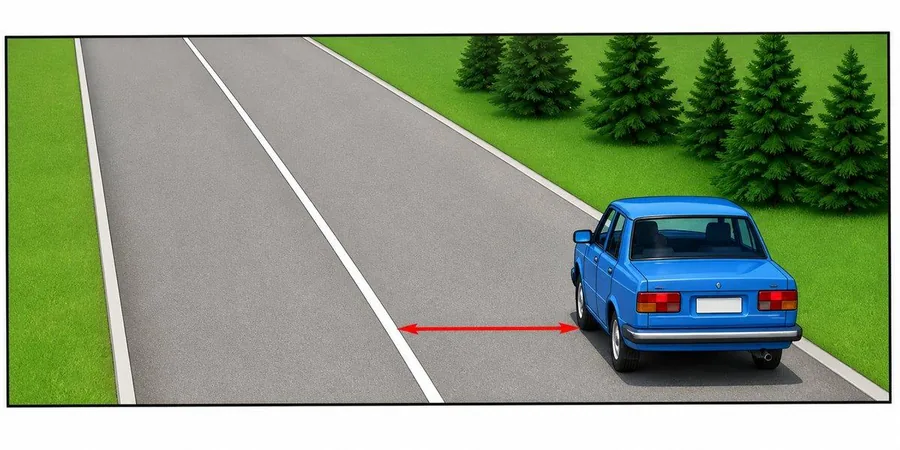
Is the automobile permitted to stop at this location?
1
Prohibited because the distance between the broken pavement marking and the stopped vehicle is less than 3 m.
2
Prohibited on even-numbered days of the month.
3
Permitted.
(Correct answer)
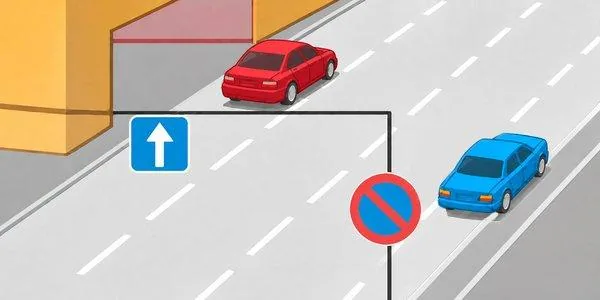
37
Which vehicle driver has violated the parking rules?
1
The driver of the blue automobile.
2
The driver of the red automobile.
3
Both drivers have violated the rules.
(Correct answer)
4
Neither driver has violated the rules.
38
Outside populated areas, where is parking for extended rest, overnight stays, or other purposes permitted?
1
On the shoulders of the road.
2
In areas designated for parking or outside the boundaries of the road.
(Correct answer)
3
On the right side of the roadway, provided it does not interfere with other vehicle traffic.
4
On the left side of the road, provided road traffic safety is ensured.
39
Stopping is prohibited if the distance between the solid line and the stopped vehicle is:
1
6 m.
2
5.5 m.
3
4 m.
4
3.5 m.
5
2.5 m.
(Correct answer)
40
If traffic across a railroad crossing is prohibited and there are no traffic signals, traffic signs, pavement markings, or barrier gate, the driver must stop:
1
At least 5 m from the nearest rail.
2
At least 7 m from the nearest rail.
3
At least 10 m from the nearest rail.
(Correct answer)