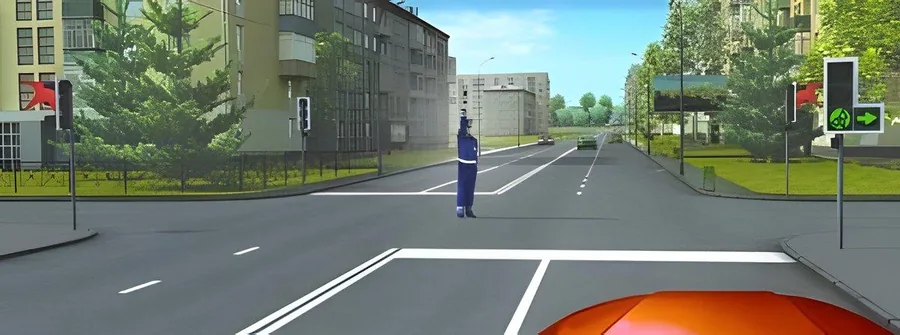
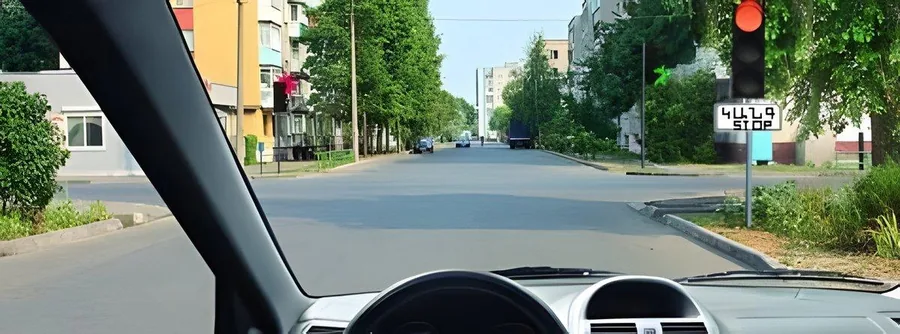
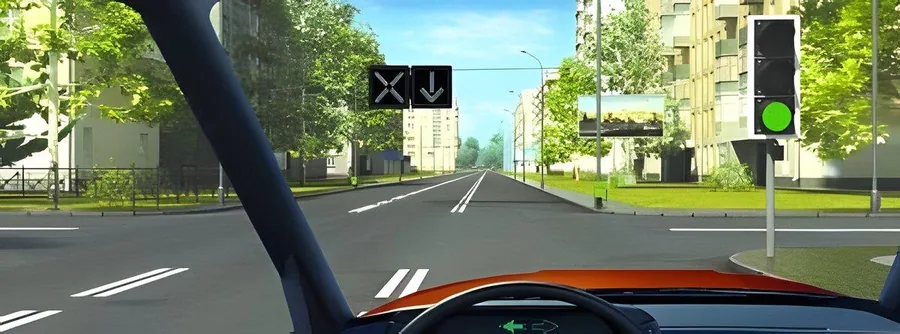
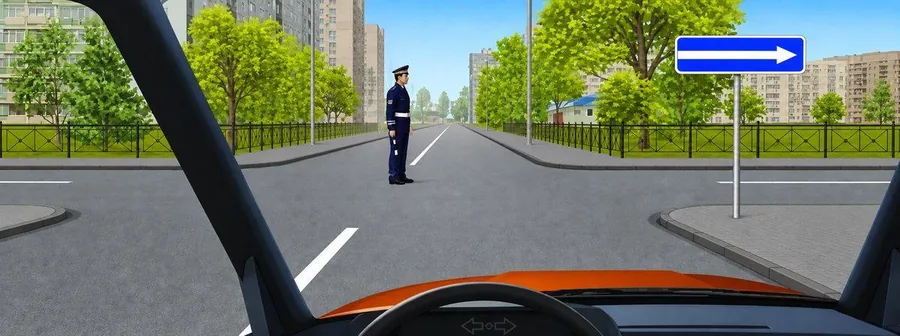
1
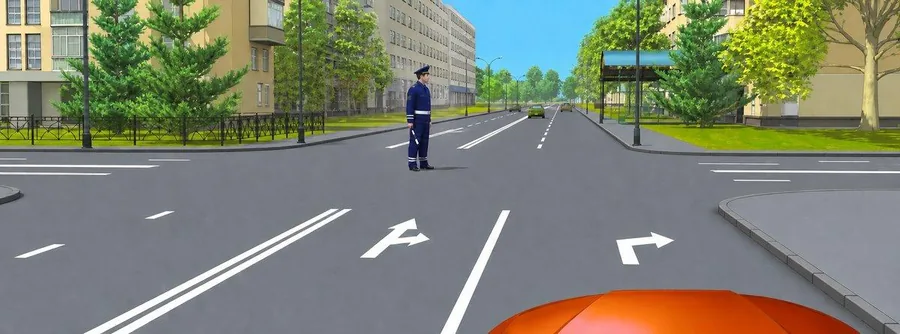
Prohibited from proceeding through the intersection.
(Correct answer)
2
Permitted to proceed through the intersection in all cases.
3
Permitted to proceed through the intersection if the driver cannot stop before the “Stop Line” without sudden braking.
82
When complying with the traffic signal, where must the driver stop?
1
Before the traffic signal.
(Correct answer)
2
Before the intersecting roadway.
3
At any location.
83
A left turn is permitted:
1
From the reversible traffic lane.
2
From the lane indicated in the image.
(Correct answer)
84
Traffic is permitted:
1
Straight ahead only.
2
To the right only.
3
Straight ahead and to the right.
(Correct answer)
85
Traffic is permitted:
1
Straight ahead and to the right.
2
Straight ahead only.
3
To the right only.
(Correct answer)
86
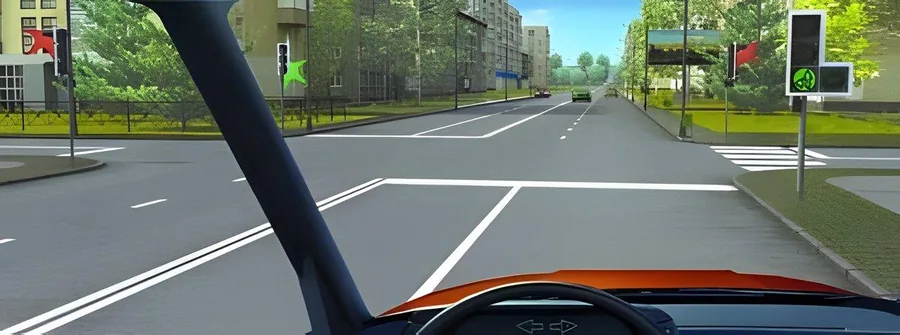
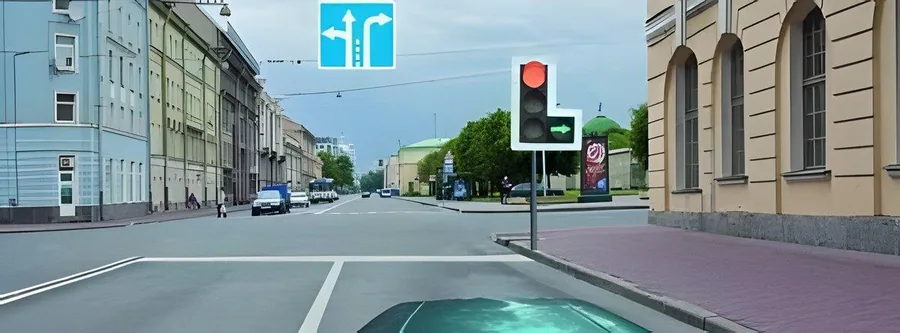
The arrows shown in the green traffic signal indicate that:
1
A right turn is prohibited.
2
Traffic to the right is controlled by an additional traffic-signal section.
(Correct answer)
87
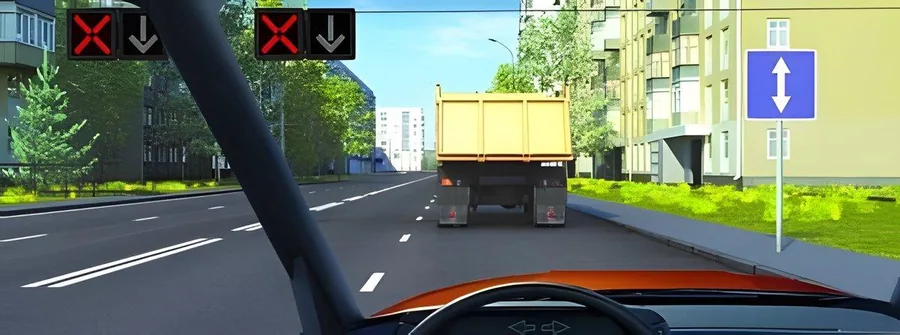
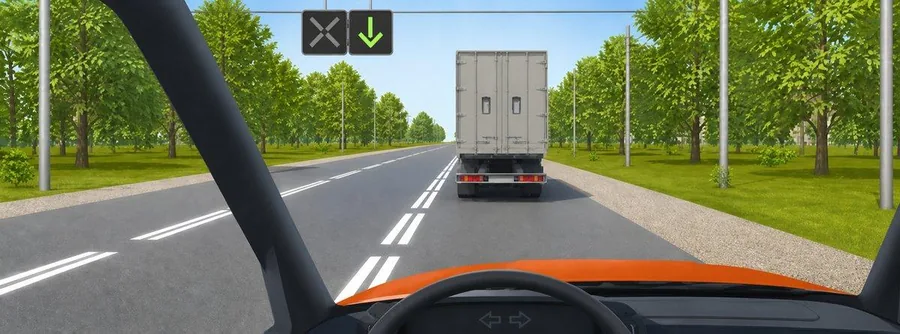
Is passing the truck permitted?
1
Yes.
2
No.
(Correct answer)
88
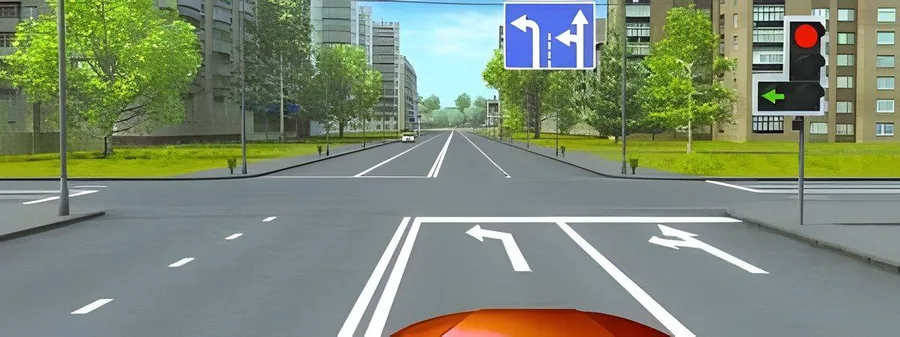
In which direction or directions may the driver continue in this situation?
1
To the left only.
2
The driver must wait for a permissive signal.
3
To the left and by making a U-turn.
(Correct answer)
89
In this situation, entering the reversible traffic lane is:
1
Permitted.
(Correct answer)
2
Permitted only for the purpose of passing.
3
Prohibited.
90
Proceeding straight ahead from the indicated lane is:
1
Permitted.
2
Permitted only after the main green signal turns on.
3
Prohibited.
(Correct answer)
91
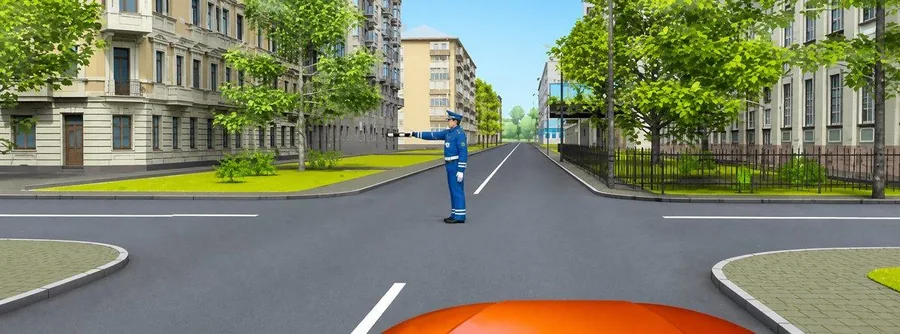
Traffic is permitted:
1
Straight ahead and to the right.
2
To the right only.
3
In all directions.
(Correct answer)
92
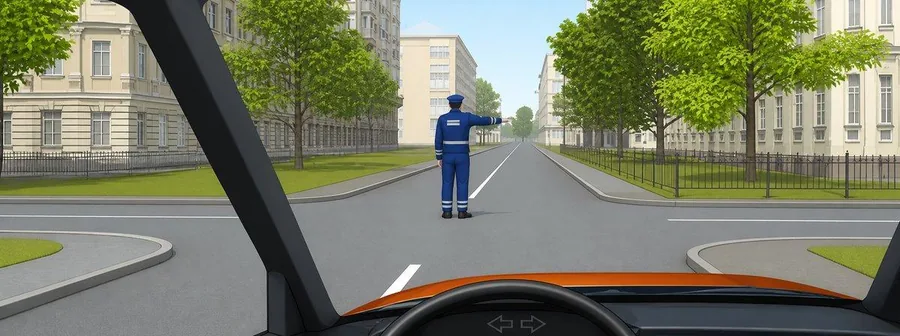
In this situation, traffic is:
1
Permitted.
2
Prohibited.
(Correct answer)
93
Before starting to move or performing a maneuver, a bus driver must make sure that:
1
There are no other vehicles in the driver’s lane at that moment.
2
The maneuver is safe and will not create an obstruction for other road users.
(Correct answer)
3
The maneuver will be completed as quickly as possible to clear the road.
94
Is it permitted to proceed on tram tracks in the same direction located on the left side of the roadway at the same level as the roadway if all lanes in that direction are occupied?
1
Permitted if no other traffic arrangement is established by appropriate signs and if this does not interfere with tram traffic.
(Correct answer)
2
Permitted only when the vehicle is passing.
3
Prohibited in all cases because tram tracks are intended exclusively for rail vehicles.
95
If the roadway is divided into lanes by pavement markings, when is a driver permitted to cross the broken lines separating the lanes?
1
Only when changing lanes.
(Correct answer)
2
The driver may cross and proceed along the broken line at any time if there are no other vehicles on the road.
3
In both cases.
96
What following distance must a bus driver maintain from the vehicle ahead?
1
A distance sufficient to avoid a collision with it.
(Correct answer)
2
A distance that allows vehicles passing the bus to complete the passing maneuver and change back into the lane ahead without obstruction.
97
What lateral distance must a bus driver maintain from a vehicle traveling alongside?
1
A distance sufficient to avoid a collision with it.
(Correct answer)
2
At least 0.5 meters.
3
At least 1 meter.
98
Outside populated areas, on two-way roads with one lane in each direction, what distance must drivers of buses longer than 7 meters maintain from the vehicle ahead?
1
At least 50 meters, regardless of speed and road conditions.
2
A distance sufficient to allow drivers passing them to change back into the previously occupied lane without obstruction if necessary.
(Correct answer)
3
At their discretion, based on traffic safety.
99
Before beginning to pass, among other requirements, a bus driver must make sure that:
1
After completing the passing maneuver, the driver can return to the previously occupied lane without interfering with the vehicle being passed.
(Correct answer)
2
The driver of the vehicle ahead has noticed the maneuver and is yielding by reducing speed.
3
In both cases.
100
Before beginning to pass, among other requirements, a bus driver must make sure that:
1
Vehicles behind are maintaining sufficient distance, and the vehicle ahead has already begun to reduce speed to yield.
2
A vehicle traveling behind in the same lane has not started passing, and the vehicle ahead has not signaled an intention to pass, turn left, or make a U-turn.
(Correct answer)